Chicago Tribune quotes Mazzone on birthright citizenship

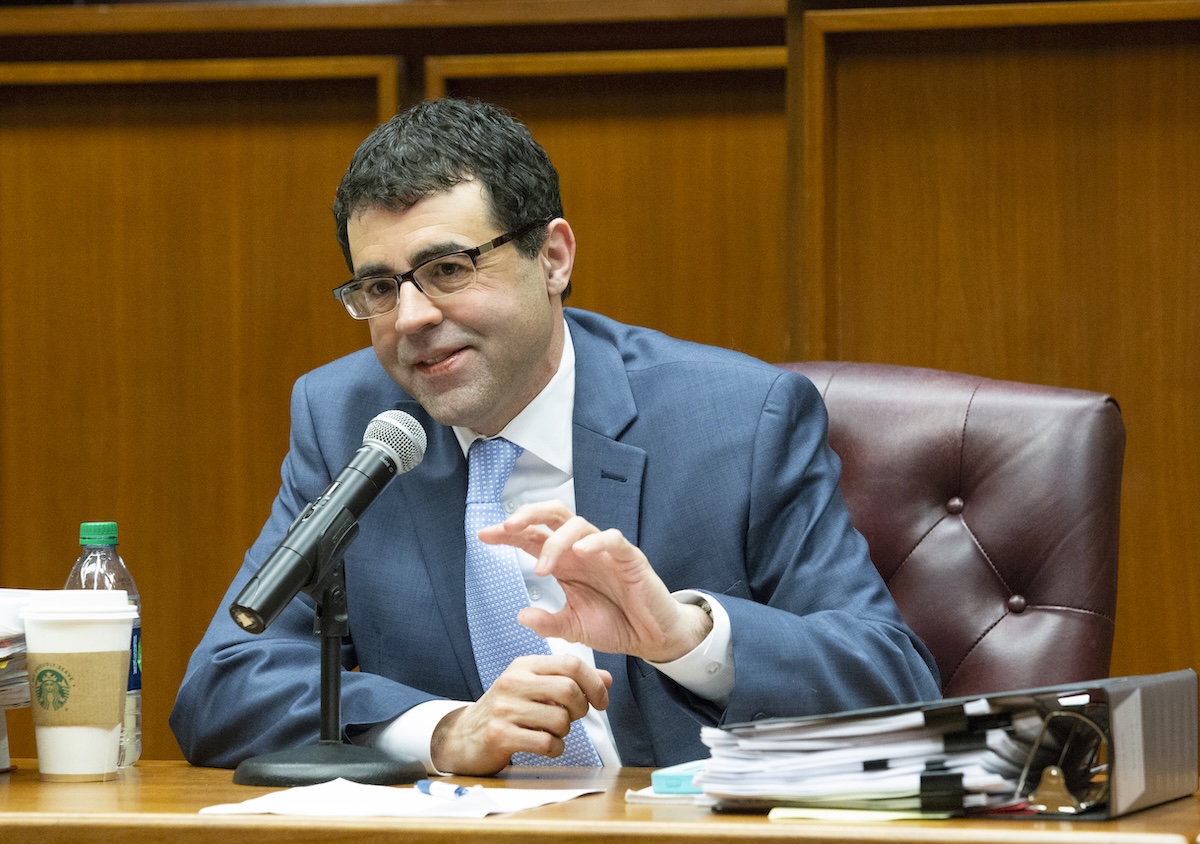
“There are few cases that are more important than this one,” Professor Jason Mazzone told the Chicago Tribune about the United States Supreme Court’s case deciding the constitutionality of President Donald Trump’s attempt to restrict birthright citizenship. In an extensive article about how the end of birthright citizenship would affect those in Chicago, Mazzone told the Tribune the Court must rule the effort unconstitutional. “If you read the president’s executive order and you match it to the language of the 14th Amendment I think most people will see the flat contradiction between those two texts,” he said.

SCOTUS must invalidate birthright citizenship order, Mazzone and Amar write

President Donald Trump issued an executive order that would end birthright citizenship as commonly understood. More than a year later, the Supreme Court is set to hear arguments on the case, and Professors Jason Mazzone and Vikram Amar believe the order should be invalidated. Writing at Justia Verdict, the professors argue, again, that the order violates the first sentence of Section One of the Fourteenth Amendment, and it also flouts the 1952 Immigration and Nationality Act.

Reuters quotes Mazzone and Amar on ICE lawsuits

As Democrat-led states seek new laws that allow individuals to sue federal agents in response to tactics used by Immigration and Customs Enforcement (ICE), Reuters quotes Professors Jason Mazzone and Vikram Amar on a law that Illinois recently passed. Their scholarship, originally published in Justia Verdict, called the Illinois law “innovative” but “imperfect” as a way to address these concerns.

Mazzone part of Sawyer Seminar grant team

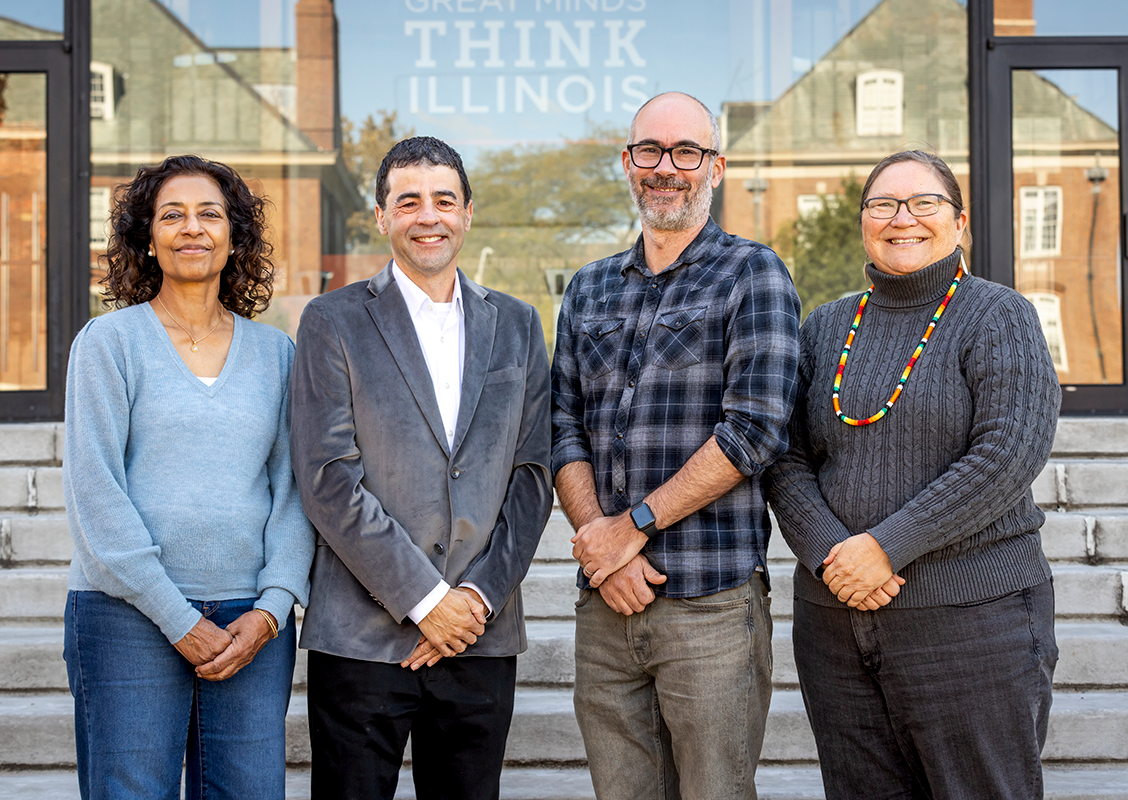
For the first time in the 30-year history of the Sawyer Seminar Program, a team of Illinois faculty researchers have been awarded the prestigious grant, including College of Law Professor Jason Mazzone. The grant is given through Andrew W. Mellon Foundation to groups studying the challenges to democracy and academic freedom confronting US universities now. The Illinois initiative includes Susan Koshy (Asian American Studies and English), Rosalyn LaPier (History and American Indian Studies), Jason Mazzone (Law), and David Sepkoski (History).

The group’s work will examine risk and academic freedom through a series of case studies done in conjunction with a larger team of contributors from around the university. The Sawyer Seminar’s activities will span a two-year period, beginning in the spring of 2026.

Trump v. Barbara is biggest case of term, Mazzone writes

In terms of impact, the biggest case before the United States Supreme Court in its current term is Trump v. Barbara, Professor Jason Mazzone predicted in the News-Gazette. The case, which will consider the constitutionality of President Donald Trump’s executive order denying birthright citizenship to individuals born in the United States, is “plainly unconstitutional,” he states. “I expect that when the court rules in Trump v. Barbara, it will issue a strongly originalist decision that deploys constitutional text, structure and history to reject the president’s attempt to evade the plain words of the Fourteenth Amendment. That will be a fitting outcome in the year in which we celebrate the 250th anniversary of the Declaration of Independence,” he concludes.

Bivens Act a good start, but imperfect argue Mazzone and Amar

In October, the Illinois Legislature passed the Bivens Act, which provides new state-level protections for individuals interacting with Illinois courts, hospitals, schools, and child-care centers during civil immigration enforcement activities. Writing at Justia Verdict, Professors Jason Mazzone and Vikram Amar praise the law as “an important and innovative law in keeping with the proudest tradition of federalism”; however, they note that some aspects of the Act are unlikely to survive federal constitutional challenges. In their article, they explain why the law is good and why some parts are destined to be struck down.

Mazzone discusses constitutionality of a proposed “billionaire’s tax” in Illinois

Although it was ultimately not included in the recently approved Chicago area transit bailout measure, Professor Jason Mazzone told the Cook County Record in late October that the proposed “billionaire’s tax” would face a stiff uphill battle in court.

“The sponsors of the (legislation), which would impose a tax on unrealized gains on assets owned by state residents with net assets exceeding $1 billion in value, contend that the proposed new tax is not a tax on personal property but on income,” Mazzone wrote in an email answer to questions from The Record.

“The Illinois courts will be very skeptical of this claim for the simple reason that a gain on paper, without any money ever being exchanged, does not obviously count as income within the ordinary meaning of the word or in the world of financial management or taxation,” Mazzone said.

“An increase in wealth is quite different from an increase in income. The state constitution distinguishes between the two. Courts will be inclined to keep the line between them sharp.”

Mazzone and Amar breakdown Bost v. Illinois State Board of Elections

The U.S. Supreme Court granted review in Bost v. Illinois State Board of Elections on a preliminary question of whether the parties who brought suit had standing under Article III of the Constitution to invoke the power of the federal courts in the first place. Writing at Justia Verdict, Professors Jason Mazzone and Vikram Amar offer analysis as to how the Court should approach the issues raised by Bost, and why it should rule in plaintiffs’ favor.

Fairness in sport case is already moot, Mazzone and Amar contend

One of the cases before the U.S. Supreme Court in its latest term is already moot, Professors Jason Mazzone and Vikram Amar argue in a new editorial published at Justia Verdict. Little v. Hecox present the justices with the question of whether laws to protect women’s and girls’ sports by limiting participation based on sex assigned at birth violate the Equal Protection Clause of the Fourteenth Amendment. Examining the facts in the case, they find that the justices should find the case moot and order vacatur.

College of Law
504 East Pennsylvania Avenue
Champaign, IL 61820
(217) 333-0931