Lawless joins American Bankruptcy Institute Podcast

The Supreme Court ruled in June on the case of Keathley v. Buddy Ayres Construction, unanimously held that courts should look to the totality of the circumstances when determining whether an omission of a claim in the bankruptcy context was inadvertent or mistaken for purposes of the judicial estoppel doctrine. Professor Robert Lawless, who joined an amicus brief on the case, joined host Bill Rochelle on the American Bankruptcy Institute Podcast to discuss the facts of the case, the decision, and how courts are likely to proceed moving forward.

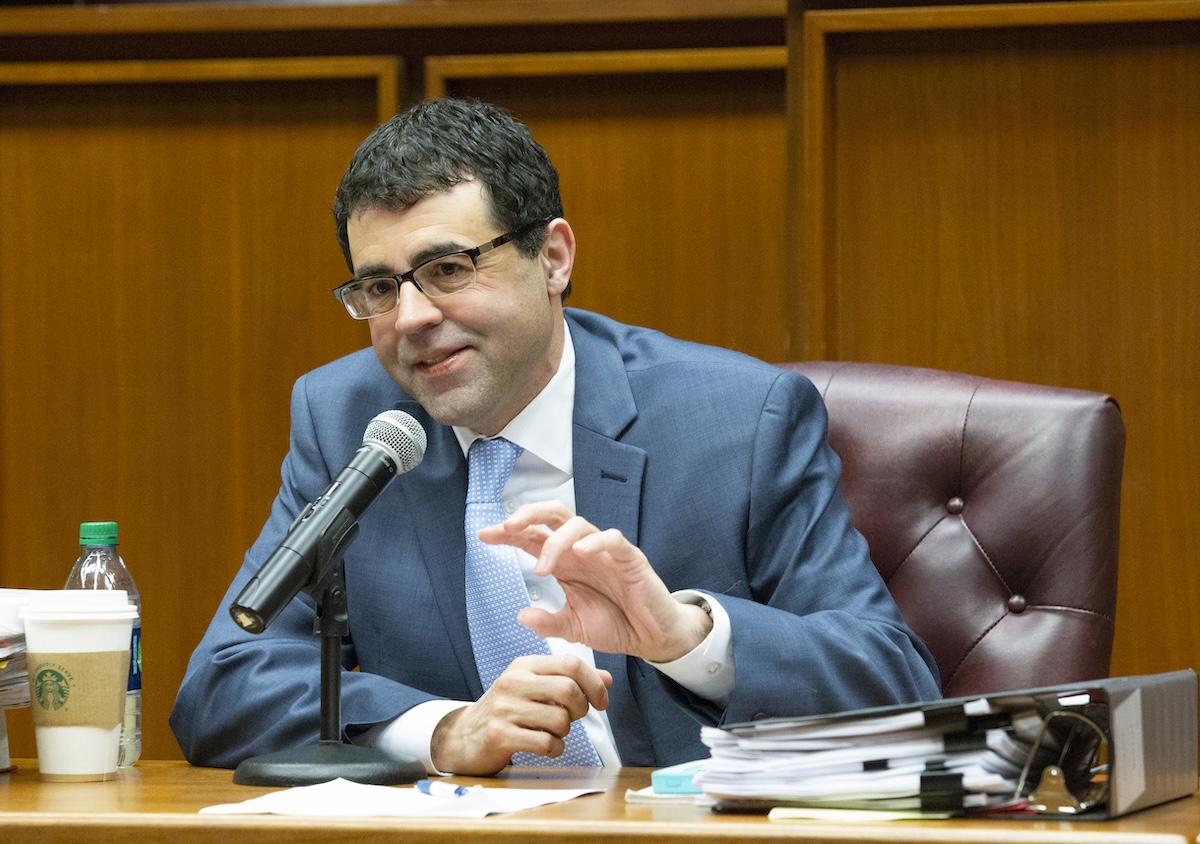
Lawsky joins panel at New York Fed Innovation Conference

In June, Professor Sarah Lawsky joined a panel discussion on Turning Law into Verified Code at the Federal Reserve Bank of New York’s Innovation Conference. The two-day conference brought together individuals from academia, industry, and other areas to share ideas on technology and finance. The conference explored the landscape of the financial world and the role of banks and the private sector in innovation and stability.

Mazzone and Amar analyze new developments in judge suit

Following up on previous work, Professors Jason Mazzone and Vikram Amar continue their analysis of the federal lawsuit brought by Judge James R. Brown against the Justices of the Illinois Supreme Court in a new article at Justia Verdict. The court declined to issue a preliminary injunction, which the authors found defensible; however, much of the court’s reasoning was described as problematic in the article. They break down what aspects of the case they found most fault with at this point, but note that this will not be the end of the intrigue in this case.

Rochelle’s Daily Wire quotes Lawless on copyright termination

Copyright termination is a process by which copyright holders may terminate a grant—or transfer—of their rights. In a recent Eleventh Circuit case, judges ruled that termination rights are retained by an estate even after discharge, a decision that presents some problems. Rochelle’s Daily Wire, a publication of the American Bankruptcy Institute, quoted Professor Robert Lawless on this topic, including his suggestion of how courts may create a more useful mechanism for future cases.

Curtis examines lawfulness of Iran War

Can U.S. service members refuse to engage in what may be seen as unlawful orders? This is a question that has been at the forefront of many military news stories thanks to the FBI’s investigation into Sen. Mark Kelly and Sen. Lisa Murkowski, who reminded leaders of the legal option to refuse. Professor Yulanda Curtis, in an op-ed published by The Fulcrum, looks at the Iran War, which was not approved by Congress, and questions whether troops may be punished for disobeying orders even if the war is later determined to be illegal. “The United States faces a critical choice about the future of its military. Especially now when war has been initiated and U.S. troops have been killed,” she writes.

Service is a path out of poverty, Curtis writes

For Women Veteran’s Recognition Day, Professor Yulanda Curtis, director of the Veterans Legal Clinic, wrote an editorial for The Grio about how serving in the armed forces helped provide her mother with a pathway out of poverty. She served for 20 years, starting with her parents’ permission at just 17 years old, and forged a life of opportunity for herself and her family. “For many young Americans, especially those from impoverished areas like the Mississippi Delta, the military is not a calling. It is a pathway out. It is essential to think of migration as something that happens across borders,” Curtis writes in her editorial. “In that sense, many servicemembers are internal migrants,.”

Chicago Tribune quotes Mazzone on birthright citizenship case

When the Supreme Court announced its decision regarding President Trump’s attempt to end birthright citizenship, as guaranteed by the 14th Amendment, via executive order, the ruling in favor of the Constitution was a relief to countless individuals. The Chicago Tribune framed the story around the joy felt by Illinois immigrants and political leaders in the wake of the decision. Professor Jason Mazzone shared his thoughts on the decision as well, telling the Tribune, “With the nation’s 250th anniversary days away, the Court’s ruling is a powerful reminder of the nation’s commitment to the fundamental principle of birthright equality.”

Illinois Law and Engineering Faculty Submit Interdisciplinary Comment on Landmark Nuclear Reactor Rule

Faculty and researchers from the University of Illinois Urbana-Champaign have submitted a public comment to the U.S. Nuclear Regulatory Commission (NRC) addressing the agency’s proposed rule on “Part 57,” a major regulatory initiative that attempts to modernize U.S. nuclear regulation by creating a dedicated licensing framework for new nuclear technologies, including microreactors and certain advanced nuclear reactors.

The submission reflects a unique collaboration between researchers at the University of Illinois College of Law and the Grainger College of Engineering, bringing together nationally recognized strengths in both engineering and administrative law to address complex regulatory questions with substantial societal consequences.

Led jointly by Professor Arden Rowell of the College of Law and Professor Zahra Mohaghegh of the Department of Nuclear, Plasma and Radiological Engineering (NPRE), the comment combines administrative law, statutory interpretation, engineering risk analysis, and regulatory economics to evaluate the NRC’s proposed framework. George Joslin, a Ph.D. student in NPRE and graduate researcher in Mohaghegh’s Socio-Technical Risk Analysis (SoTeRiA) Research Laboratory, also contributed to the effort.

The proposed Part 57 rule was developed pursuant to Section 208 of the ADVANCE Act and represents a significant step in U.S. nuclear policy. The Illinois team’s submission evaluates whether the NRC’s proposal satisfies the requirements of the Atomic Energy Act, the ADVANCE Act, and the Administrative Procedure Act while also providing a technically and legally defensible foundation for future advanced-reactor licensing.

The comment addresses two central questions: whether the NRC’s proposed safety framework adequately supports the agency’s statutory obligations concerning safety, efficiency, and reasoned decision-making, and whether the agency’s regulatory analysis provides a sufficiently evidence-based assessment of the rule’s costs, benefits, and alternatives. The submission recommends that the NRC continue developing cost-benefit analysis as an important component of implementing the ADVANCE Act’s efficiency mandate while strengthening the evidentiary basis for key safety and regulatory determinations. It also calls for additional legal and technical justification regarding accident-analysis methodologies, cumulative impacts associated with multi-reactor deployment, and the treatment of uncertainty in the agency’s regulatory analysis.

The collaboration reflects a broader research partnership between the College of Law and the SoTeRiA Research Laboratory focused on the future of risk-informed and performance-based nuclear regulation. The work forms part of a larger NRC-funded research initiative examining how developments in reactor technology, probabilistic risk assessment, and administrative law are reshaping the governance of emerging energy systems.

At a time when advanced reactor deployment, administrative law doctrine, and federal regulatory policy are evolving simultaneously, the project demonstrates how interdisciplinary engagement can contribute to more durable and analytically rigorous approaches to public governance.

The comment was submitted to the NRC on June 15, 2026, and is now part of the agency’s public administrative record as the Commission evaluates comments and develops the final Part 57 rule.

Kaplan publishes article on gender discrimination in retirement plans

The requirement that individuals withdraw required minimum distribution amounts, as specified in the SECURE 2.0 Act, requires women to withdraw more than their
gender-specific life expectancy would otherwise require. This is the conclusion of Professor Richard Kaplan in a new article published in the Pittsburgh Tax Review. The paper was originally presented at an ABA-sponsored conference on revealing and addressing hidden gender bias in tax law and policy.

Lawsky updates Entry-Level Law School Hiring Report

In updates to her report on law school hiring information, Professor Sarah Lawsky recently published data on entry-level hires as of Spring 2026. Her data show 108 new hires for the 2026 year, she further breaks down the data by schools, where hires earned degrees, whether hires had a fellowship, when hires earned their degree, and several other parameters.

College of Law
504 East Pennsylvania Avenue
Champaign, IL 61820
(217) 333-0931