Lawsky invested as L.B. Lall and Sumitra Devi Lall Professor of Law

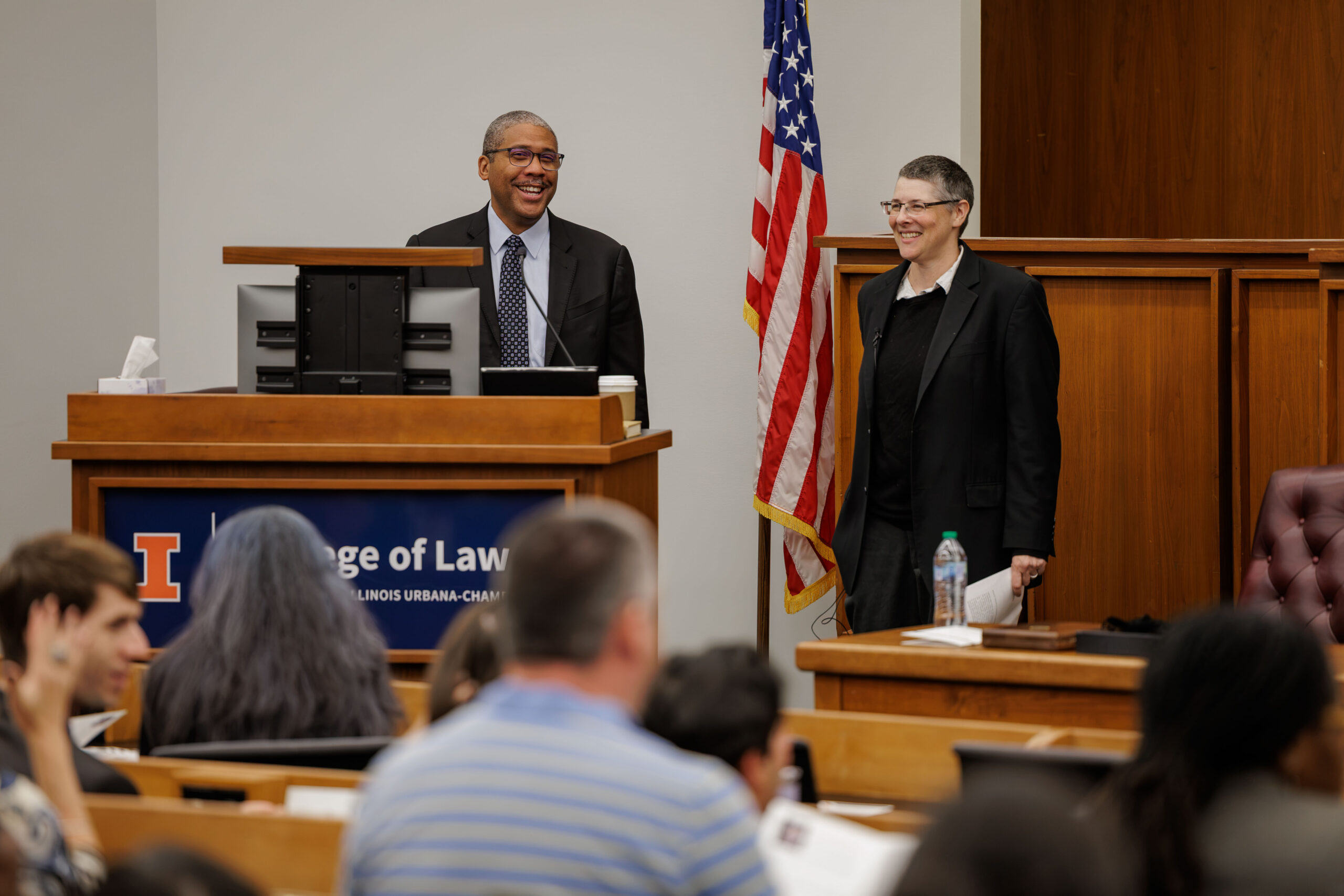
On October 13, 2026, Sarah Lawsky was invested as the L.B. Lall and Sumitra Devi Lall Professor of Law in a ceremony at the College of Law Building. At the ceremony, Dean Jamelle Sharpe hailed Professor Lawsky for the way she has endeared herself to the faculty and the University of Illinois community. He shared a quote from her peer, Professor Lesley Wexler, who said Lawsky is “deeply committed, deeply curious and willing to keep digging and tweaking until she’s satisfied she has really addressed the problem at hand…. I’m often reminded how thrilled I am Sarah joined us: thrilled as a colleague and thrilled as a friend.”

Professor Lawsky joined the University of Illinois College of Law faculty in 2025. She studies tax law, computational law, and the intersection of the two. Her recent work focuses on the formalization of tax law. Professor Lawsky’s research arguing for using a particular nonstandard logic to formalize tax law is the conceptual foundation for the domain-specific programming language Catala, which is the project of a team of computer scientists and lawyers. Before joining the University of Illinois, Professor Lawsky taught at Northwestern Pritzker School of Law, UC Irvine School of Law, and George Washington University Law School. Before entering academia, she worked as a tax lawyer for large law firms.

Lawsky delivers talk on law school hiring at AALS Candidates Workshop

Professor Sarah Lawsky spoke on a panel about law school hiring during an AALS Candidates Workshop on August 6, 2026. Her talk was specifically about “Trends in Entry Level Hiring.” The workshop provided faculty candidates an opportunity to hear from a panel of law school professors and administrators with experience in faculty hiring, discuss interview questions, and solicit advice in small groups.

Lawsky joins panel at New York Fed Innovation Conference

In June, Professor Sarah Lawsky joined a panel discussion on Turning Law into Verified Code at the Federal Reserve Bank of New York’s Innovation Conference. The two-day conference brought together individuals from academia, industry, and other areas to share ideas on technology and finance. The conference explored the landscape of the financial world and the role of banks and the private sector in innovation and stability.

Lawsky updates Entry-Level Law School Hiring Report

In updates to her report on law school hiring information, Professor Sarah Lawsky recently published data on entry-level hires as of Spring 2026. Her data show 108 new hires for the 2026 year, she further breaks down the data by schools, where hires earned degrees, whether hires had a fellowship, when hires earned their degree, and several other parameters.

Lawsky publishes article on legal inconsistencies

When a law is inconsistent, further guidance should come from Congress, courts, and administrative agencies to create clarity. In her recent article, Professor Sarah Lawsky examines via a programming language framework an example of a tax statute that mandates inconsistent outcomes for the same set of facts and shows how that inconsistency has been addressed by the Treasury and the IRS. Her article was also the subject of a TaxProfBlog article, which you can read online.

Lawsky publishes article on Direct File

Direct File, a program that allows some taxpayers to file federal income tax returns with the United States government online for free, is an extraordinary accomplishment, Professor Sarah Lawsky writes in a new article published in the Pittsburgh Tax Review. Examining the computer code underlying Direct File, Lawsky finds choices that make “the application of the law and various administrative choices more transparent even to those who are not comfortable reading computer code.”

New paper from Lawsky: “Constructing Deductions”

Professor Sarah Lawsky, along with co-author Leandra Lederman, published the paper “Constructing Deductions” on SSRN.com. The abstract follows:

This Essay identifies drafting “building blocks” that are present in the Internal Revenue Code and that are used to construct many of the deductions available to individuals. The Essay represents these building blocks using mathematical formulas and graphically, and it then shows how the building blocks are combined to create complex deductions. These formalizations and visualizations yield insight into statutory drafting choices. They also reveal “negative space”–that is, ways that federal income tax deductions could be drafted but are not.

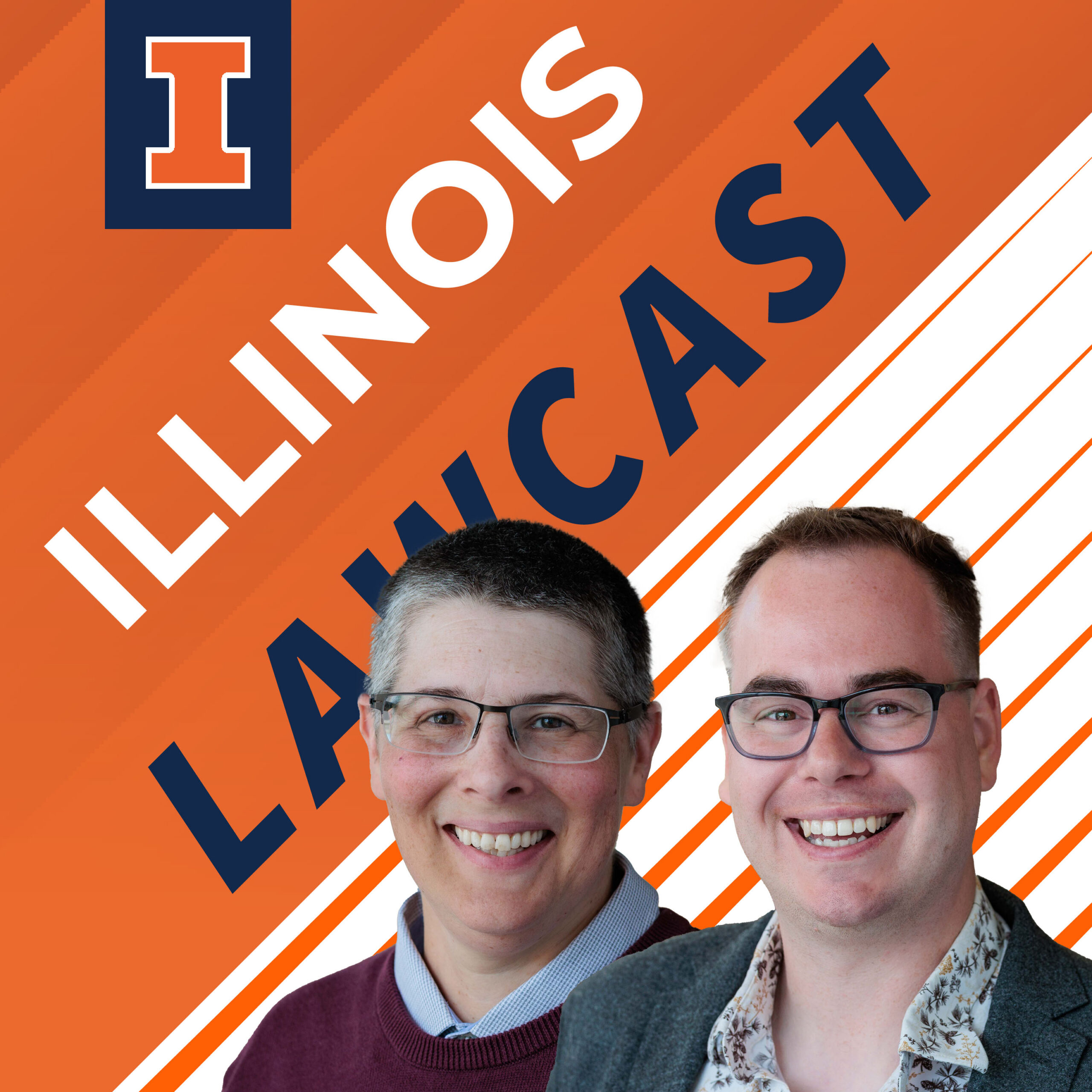
Illinois LawCast: Get to know Eric Baudry and Sarah Lawsky

In this episode we speak with our two newest full-time tenured and tenure-track faculty, Eric Baudry and Sarah Lawsky. They shared about themselves, their research, and what they are looking forward to as members of the College of Law faculty.

About Eric Baudry:

Eric Baudry is an assistant professor of law at the University of Illinois, where he teaches and writes about tax law, poverty, and redistribution. He is especially interested in the experiences of low-income taxpayers as subjects of and actors within the institution of the United States tax system. His scholarship has appeared in the Columbia Journal of Tax Law.

Following law school, Baudry clerked on the Eastern District of Michigan and the Ninth Circuit, provided wage theft and tax representation for low-wage workers as a Skadden Fellow at Mid-Minnesota Legal Aid, and spent two years as a Faculty Fellow at the University of Michigan law school.

About Sarah Lawsky:

Sarah B. Lawsky, the L.B. Lall and Sumitra Devi Lall Professor of Law, studies tax law, computational law, and the intersection of the two. Her recent work focuses on the formalization of tax law. Professor Lawsky’s research arguing for using a particular nonstandard logic to formalize tax law is the conceptual foundation for the domain-specific programming language Catala, which is the project of a team of computer scientists and lawyers.

Before joining the University of Illinois, Professor Lawsky taught at Northwestern Pritzker School of Law, UC Irvine School of Law, and George Washington University Law School. Before entering academia, she worked as a tax lawyer for large law firms.

For more information, visit the personal website of Professor Lawsky: https://www.sarahlawsky.org/

If you have comments or suggestions for the podcast, please contact podcast@law.illinois.edu.

Lawsky speaks on tax panel at Pittsburgh School of Law

On October 17, Professor Sarah Lawsky was part of a panel discussion at the University of Pittsburgh School of Law covering “AI in Tax Law: Tax Administration &
Educating the Next Generation.” She was one of eight panelists from academia, industry, government sharing expertise on the role of artificial intelligence in tax administration, legal practice, and tax law education.

Lawsky publishes article in Yale Journal on Regulation

In the most recent issue of the Yale Journal on Regulation, Professor Sarah Lawsky has published a note as part of the symposium on Joshua D. Blank and Leigh Osofsky’s “Automated Agencies: The Transformation of Government Guidance.” In her article, she concludes, “Automated guidance thus might exacerbate the access to justice gap. Unlike publications, automated guidance may fool people into thinking that they have received individualized guidance, when they actually have not.”

College of Law
504 East Pennsylvania Avenue
Champaign, IL 61820
(217) 333-0931