
Professor Ralph Brubaker published a new article on SSRN, titled “The Erie Doctrine, Code Common Law, and Choice-of-Law Rules in Bankruptcy.” The article was also featured in the Harvard Law School Bankruptcy Roundtable.
News about the Business Law Program or news about faculty or students that relates to business law
Professor Ralph Brubaker published a new article on SSRN, titled “The Erie Doctrine, Code Common Law, and Choice-of-Law Rules in Bankruptcy.” The article was also featured in the Harvard Law School Bankruptcy Roundtable.

Professor Sarah Lawsky, along with co-author Leandra Lederman, published the paper “Constructing Deductions” on SSRN.com. The abstract follows:
This Essay identifies drafting “building blocks” that are present in the Internal Revenue Code and that are used to construct many of the deductions available to individuals. The Essay represents these building blocks using mathematical formulas and graphically, and it then shows how the building blocks are combined to create complex deductions. These formalizations and visualizations yield insight into statutory drafting choices. They also reveal “negative space”–that is, ways that federal income tax deductions could be drafted but are not.
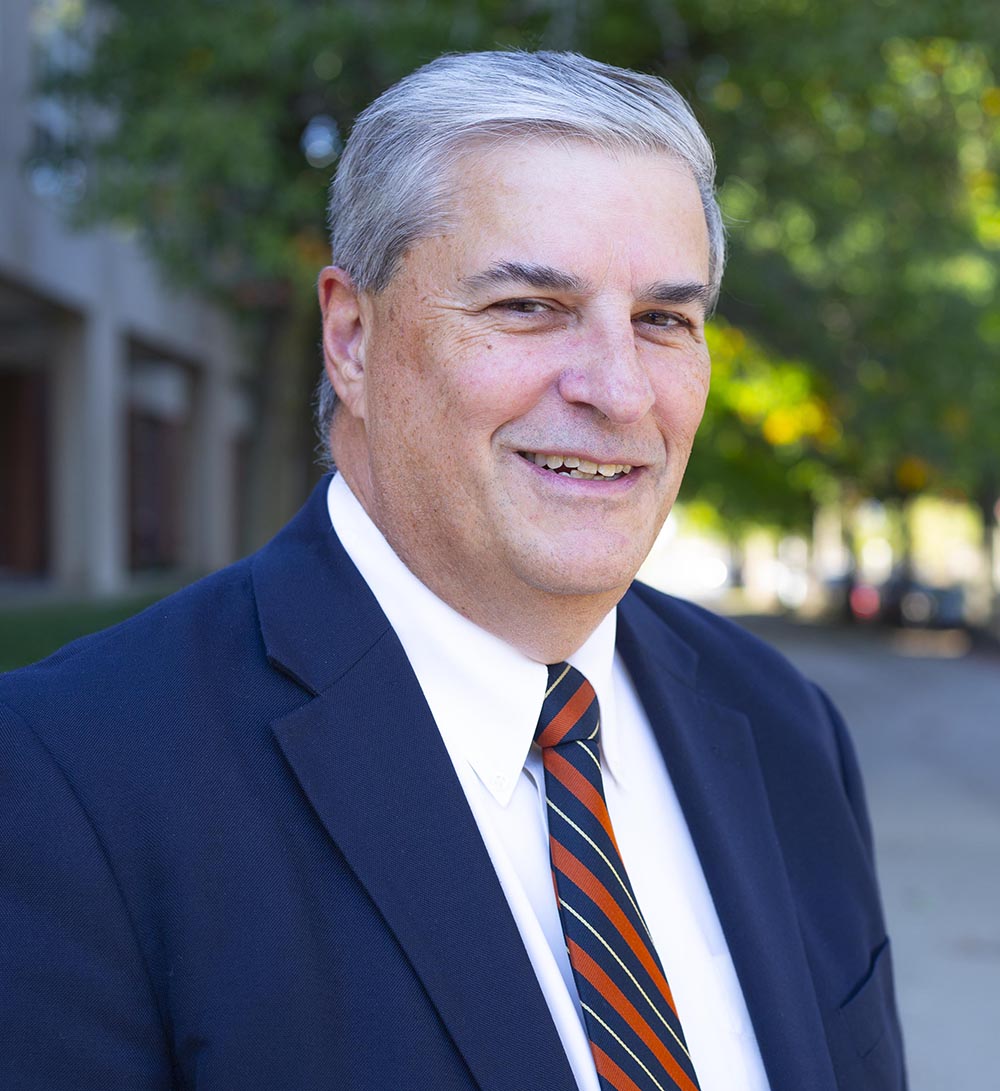
After struggling financially for years and failing to secure a government bailout, Spirit Airlines announced that it would begin the process of shutting down in early May. Investors were strongly opposed to the government bailout, especially those that had made Spirit debtor-in-possession loans. Such loans have high interest rates, and the investors who own them are paid back before other creditors. The investors also have the right to object to changes, including new loans, that could hurt their interests.
Speaking to the New York Times, bankruptcy expert and professor Bob Lawless compared the rights of these lenders to an oft-cited metaphor of hikers standing on a hill. “The new lender says, ‘We’re on this mountain trail, and there’s plenty of room for you to go out and stand out there closer to the edge of the cliff,’” Lawless said. “And the existing lender has a good response, which is that if there’s so much room, why don’t you go stand out there?”
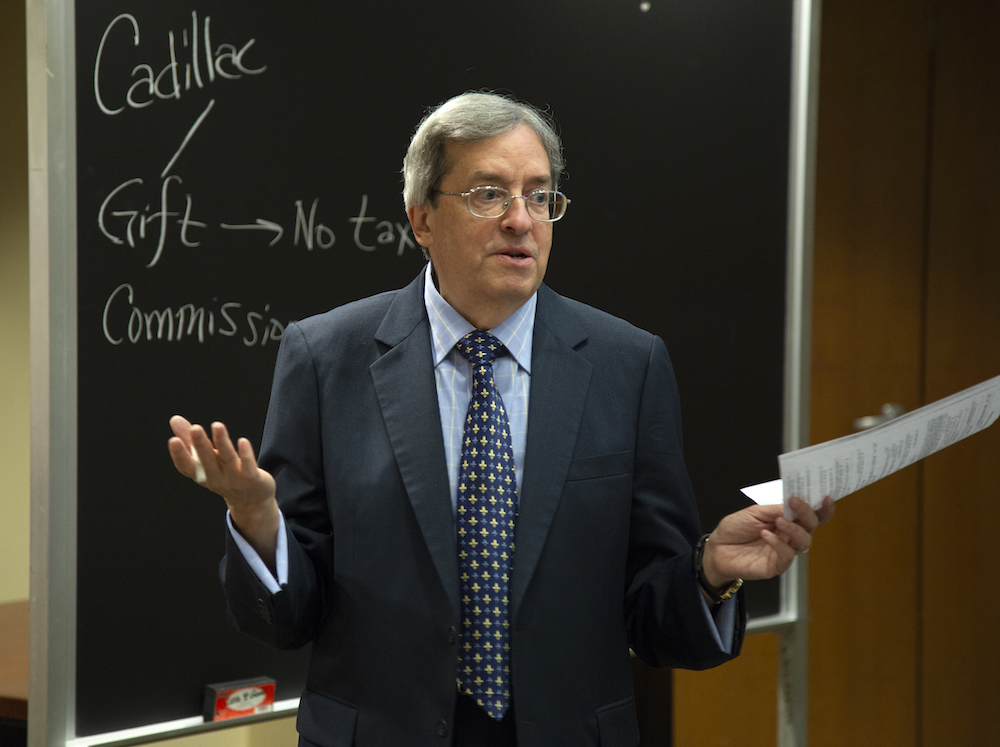
According to the New York Sun, President Trump suggested during remarks at a private luncheon that the federal government may no longer support essential care programs and that states should instead rely on state-level funding to do so.
Professor and tax law expert Richard Kaplan says that the president’s remarks about Medicare, in particular, rest on a fundamental misunderstanding of how the program is financed.
“Medicare is almost entirely funded by the federal government through payroll taxes paid by almost all employees, the great majority of self-employed persons, and most employers; premiums paid by program enrollees; and general federal funds,” Kaplan said. “States have no role of any consequence.”
As consumer bankruptcy filings continue to rise, the role of arbitration has also increased. Because the Federal Arbitration Act and the US bankruptcy code can be at odds with each other and that tension has not yet been tested by the Supreme Court, experts expect that the matter will eventually make its way there.
Professor and bankruptcy expert Bob Lawless, who has written a paper on arbitration and bankruptcy, says that unless amended or repealed, courts should follow both statutes.
Speaking to Bloomberg, he said, “You’ve got to look and say, ‘For this matter in this arbitration agreement, is this subject to arbitration, and does the arbitral demand conflict with a command in the bankruptcy code?’”
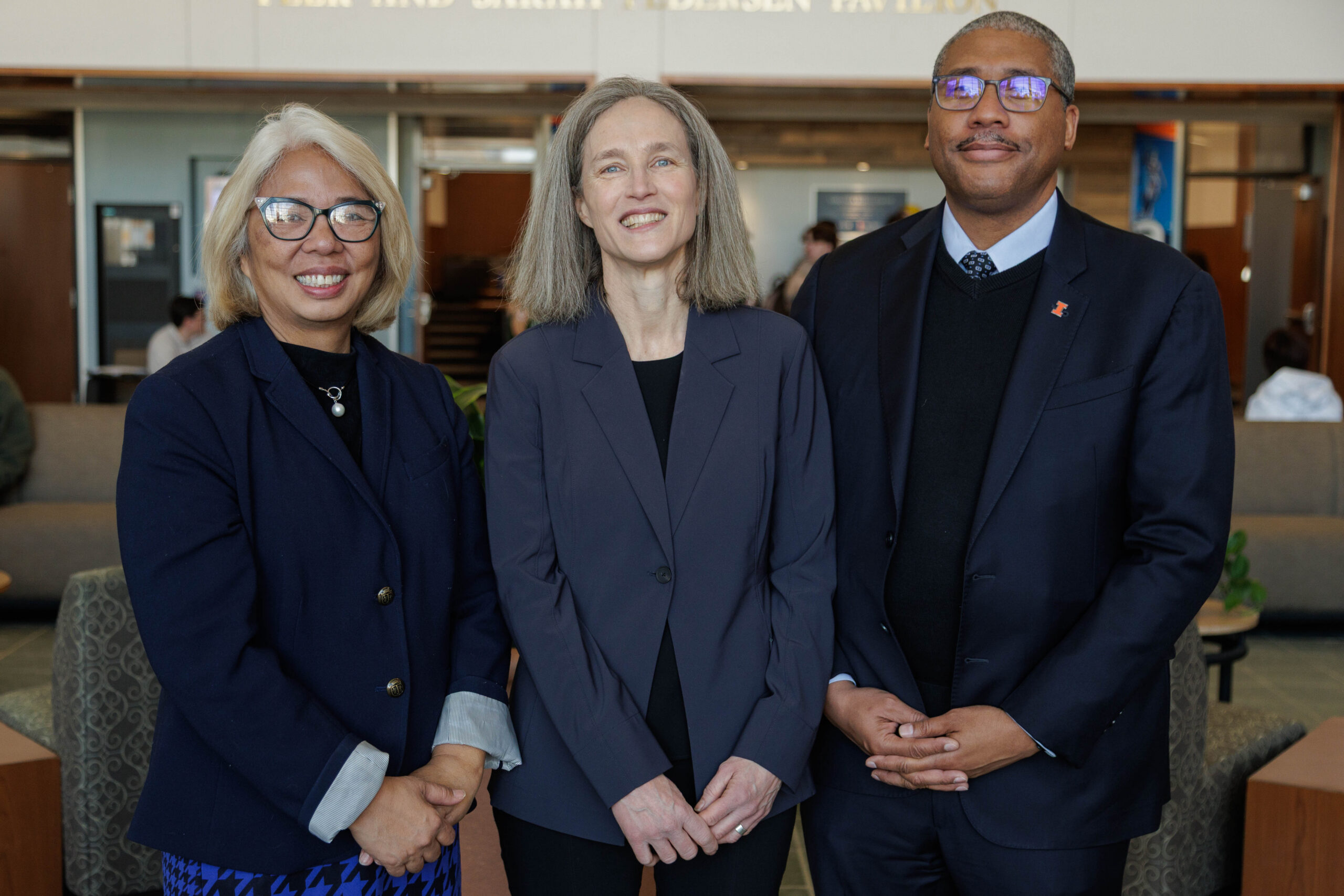
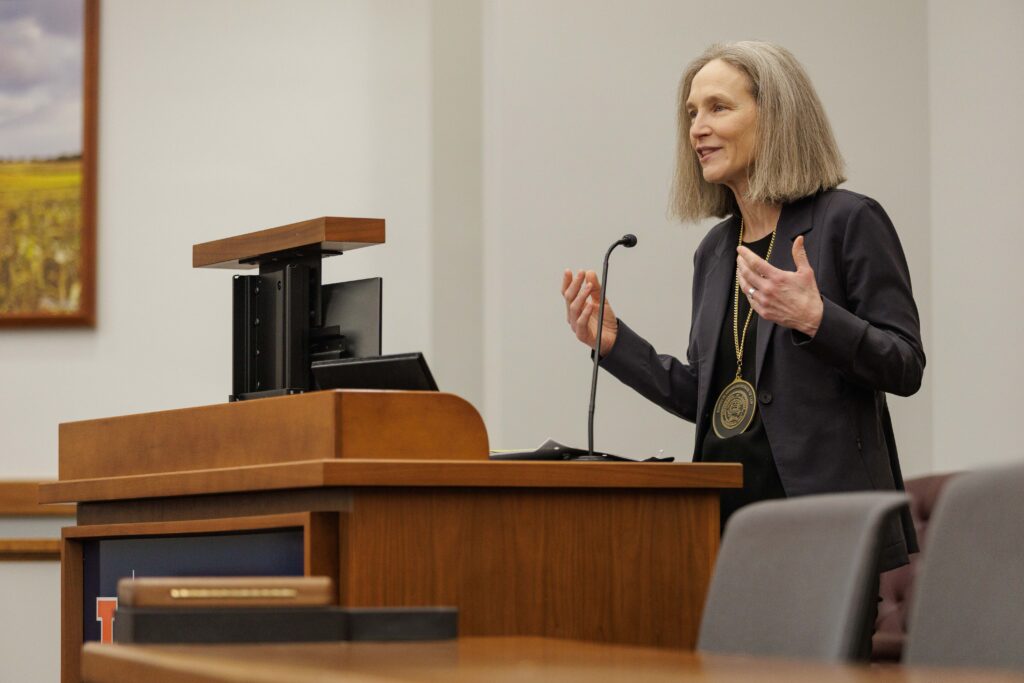
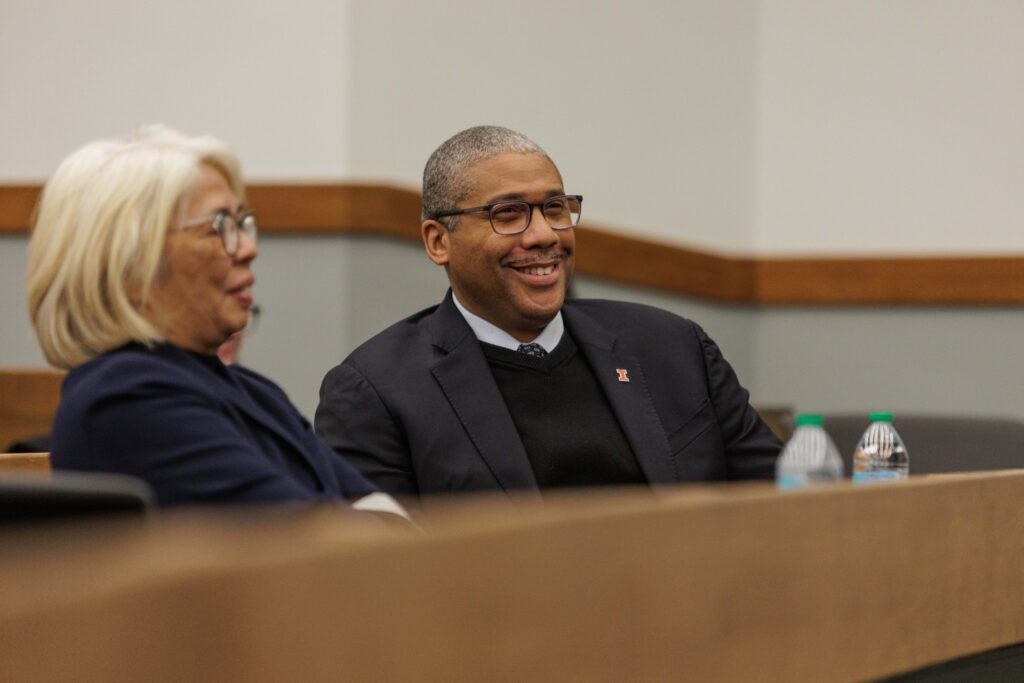
On February 10, 2026, Verity Winship was invested as the Edwin M. Adams Professor of Law in a ceremony honoring her commitment to scholarship, teaching, and public engagement.
An expert in business law and complex litigation, Professor Winship has been a vital part of the College of Law since 2010, twice earning the Carroll P. Hurd Award for Excellence in Faculty Scholarship as well as serving as Interim Dean of the College of Law and the Senior Associate Dean for Academic Affairs. She has also served as fellow in the Academic Leadership Program in the Big Ten Academic Alliance and chaired the Securities Regulation section of the American Association of Law Schools during her time at Illinois. Her full bio is available on her faculty profile page.
Professor Winship’s endowed position was made possible through a generous gift from the late Edwin M. Adams, a well-known lawyer and actor, who earned his law degree at Illinois in 1939. Joined by her family, Winship was honored with speeches from Dr. Amy Santos, associate provost for faculty development and professor in the Department of Special Education, as well as Dean Jamelle Sharpe.

Professors Ralph Brubaker and Robert Lawless were both featured in the commentary featured on the American Bankruptcy Institute’s blog, Rochelle’s Daily Wire. Their commentary discussed the most recent decision in the ongoing controversy over the propriety and legitimacy of so-called “Texas Two-Step” mass-tort bankruptcies. The decision, from the Fourth Circuit, continues to stoke opinion and Lawless writes that it sets up “a Supreme Court decision in the coming years.”
Professor Bob Lawless and co-authors Pamela Foohey and Deborah Thorne recently joined the well-regarded Ballard Spahr podcast Consumer Finance Monitor to discuss their book “Debt’s Grip: Risk and Consumer Bankruptcy.”
In the episode, they discuss why people actually file for bankruptcy, the role of debt collection and litigation, potential policy reforms, and much more.

Leading bankruptcy law expert and professor Bob Lawless recently sat down with the students behind the independent, student-run production The UIUC Talkshow. Lawless discussed the student debt crisis, the history of bankruptcy law, and some proposed solutions.

Professor Robert Lawless, along with co-authors Pamela Foohey and Deborah Thorne, recently sat down with Law360 for an in-depth interview on their book “Debt’s Grip: Risk and Consumer Bankruptcy.” The book is the latest to come out of the Consumer Bankruptcy Project, a long-term interdisciplinary research project on consumer bankruptcies in the U.S. that began in 1981. The authors discussed what they were hoping to learn (and what surprised them), how the data on who is filing for bankruptcy has changed over time, and what they want lawmakers to take away from the book.