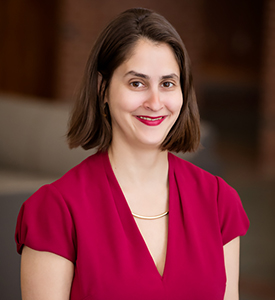
Amar and Mazzone publish article on rule of law in Pennsylvania

Are state executive officials in Pennsylvania are allowed, under the state constitution, to decline to enforce a statutory provision if the executive officials conclude that the provision violates the state’s highest law, the state constitution? That’s the primary concern of a new article by Professors Vikram Amar and Jason Mazzone. Writing at Justia Verdict, the pair investigate how the rule of law and precedent should apply to this case and how local officials and justices have failed in equal measure.

CBS quotes Lawless on when to file bankruptcy

When struggling with debt, many people delay filing for bankruptcy as long as possible; however, delaying may be more harmful than many realize. “People misunderstand bankruptcy and wait too long to see a bankruptcy lawyer. Most people would benefit by going earlier,” Professor Robert Lawless told CBS in a new article about the timing of personal bankruptcy filings. Lawless also shares tips for those who may need to file and his opinion on how the system could be improved.

Sherkow talks about Myriad’s importance a decade later

Association for Molecular Pathology v. Myriad Genetics, Inc. was a cultural phenomenon when the Supreme Court’s ruling was issued, with the outcome taking a place on the front-page of most major newspapers in the United States. Reflecting more than 10 years on from the decision, however, Professor Jacob Sherkow tells the Carl R. Woese Institute for Genomic Biology that the Myriad decision ended up having little impact on biotechnology research. 

Mazzone pens op-ed on presidential election effects on SCOTUS

“In any presidential election, the Supreme Court is on the ballot,” Professor Jason Mazzone writes in the News-Gazette. He details some of the ways in which the election of Donald Trump to a second term might affect the makeup of the Supreme Court. “The first Trump presidency generated a long list of novel legal issues, many of which reached the Supreme Court. Trump’s current bold agenda and the opposition it will produce will mean many more lawsuits in the next four years,” he concludes.

Nature quotes Sherkow on researcher who treated her own cancer

Self-treatment is a risky and controversial choice, as detailed in a new Nature article about a cancer researcher who decided to do research and treat her own breast cancer. In the article, Professor Jacob Sherkow is quoted about the dangers of publishing this kind of work; his comments are also included in a story for Futurism.

Read both the Nature article and the Futurism article online.

Thomas speaks at Survival of the Jury symposium

On Friday, October 25, 2024, Professor Suja Thomas spoke at the Survival of the Jury at George Washington Law School in Washington, DC. The symposium focused on the past, present, and future of the jury in the U.S. legal system and Professor Thomas spoke about how federal judges in the U.S. dismiss far more employment discrimination cases before trial than judges in the United Kingdom.

Markus ’86 discusses Russia sanctions with News Bureau

“Much depends on our leaders and whether a judicious long-term approach to easing sanctions is taken. A president should also be cognizant of responses from our allies in a changing world order,” Taisa Markus ’86 told the Illinois News Bureau. She spoke at length about the sanctions the United States has placed on Russia in the wake of the invasion of Ukraine and how those might change under a new administration.

Francis Boyle, long-time College of Law faculty member, passes away

Professor Francis Boyle passed away on Thursday, January 30, 2025. Professor Boyle, an internationally recognized scholar of human rights and international law, was a member of the College of Law faculty for 47 years and touched the lives of generations of students, not to mention his colleagues.

Over his career, Professor Boyle represented national and international bodies including the Blackfoot Nation (Canada), the Nation of Hawaii, and the Lakota Nation, as well as numerous individual death penalty and human rights cases. He advised numerous international bodies in the areas of human rights, war crimes and genocide, nuclear policy, and bio-warfare. He served as counsel to Bosnia and Herzegovina and to the Provisional Government of the Palestinian Authority. He also represented two associations of citizens within Bosnia and was involved in developing the indictment against Slobodan Milosević for genocide, crimes against humanity, and war crimes in Bosnia and Herzegovina. From 1991-92, he served as Legal Advisor to the Palestinian Delegation to the Middle East Peace Negotiations.

Professor Boyle served on the Board of Directors of Amnesty International, as a consultant to the American Friends Service Committee, and on the Advisory Board for the Council for Responsible Genetics. He was involved in drafting the U.S. domestic implementing legislation for the Biological Weapons Convention, known as the Biological Weapons Anti-Terrorism Act of 1989, that was approved unanimously by both Houses of the U.S. Congress and signed into law by President George H.W. Bush.

Professor Boyle received an AB (1971) in Political Science from the University of Chicago, then a JD degree magna cum laude from Harvard Law School, and AM and PhD degrees in Political Science from Harvard University. Prior to joining the academy, he practiced tax law with Bingham, Dana & Gould.

Professor Boyle is survived by his wife, Betsy, and their children.

Finkin honored for his contributions to the fields of labor law and higher education law

After a 36-year career at the University of Illinois College of Law, Swanlund Endowed Chair and Professor Matthew Finkin officially retired and was granted emeritus status in the fall of 2024. A prolific and highly respected labor law scholar, Finkin has been honored at several significant events in recent months. 

In June, a session on comparative labor law during the Annual Meeting of the Labor and Employment Relations Association celebrated Finkin’s career, books, and contributions to Comparative Labor Law and Policy Journal. Fellow scholars in the field called Finkin “the top comparative labor law scholar in the last 50 years,” and said, “Matt has done more than anyone to raise our eyes from the drama of the birth of labor relations in the U.S.”

Finkin’s retirement also motivated the organization of a high-profile event right here at the University of Illinois, in celebration of his contributions to the important topics of freedom of speech and academic freedom. The Campus Speech and Academic Freedom Roundtable took place on Friday, January 24, 2025, and featured world-renowned scholars and public intellectuals who engaged with the contentious questions raised by recent high-profile incidents of unpopular speech on American college campuses.  

The current Dean of the UC-Berkeley School of Law, Erwin Chemerinsky, and Finkin himself, addressed the ways in which the First Amendment and university commitments to academic freedom relate in cases involving controversial faculty speech. The past Dean and Sterling Professor of Law at Yale Law School, Robert Post, addressed the defensibility and wisdom of the now-common practice by universities, colleges, and departments to take public positions on matters of contemporary dispute. And Illinois’ Michael S. Moore, the Charles R. Walgreen Jr. University Chair, and Heidi M. Hurd, the past Dean and Ross and Helen Workman Chair in Law, teamed up to address the legitimate responses available to university administrators who are faced with blameworthy student speech. Attended by College of Law faculty, students, and alumni, the four lectures prompted lively conversations throughout the day and served as a fitting tribute to Professor Finkin.

Group photo of the reception honoring Matthew Finkin

Illinois LawCast: Understanding the TikTok ban with Lena Shapiro

The Supreme Court unanimously agreed the law banning TikTok from the United States was constitutional and should go into effect as written; however, on January 20th, President Donald Trump instructed the Attorney General not to enforce the law for 75 days. So, what is going on and what is the legal basis for any of it? Professor Lena Shapiro, who also leads our First Amendment Clinic Director, joined us for a bonus episode of the podcast to examine the details behind this case.

If you have comments or suggestions for the podcast, please contact podcast@law.illinois.edu.

College of Law
504 East Pennsylvania Avenue
Champaign, IL 61820
(217) 333-0931