Hurd lectures in Luxembourg on anthropocentrism

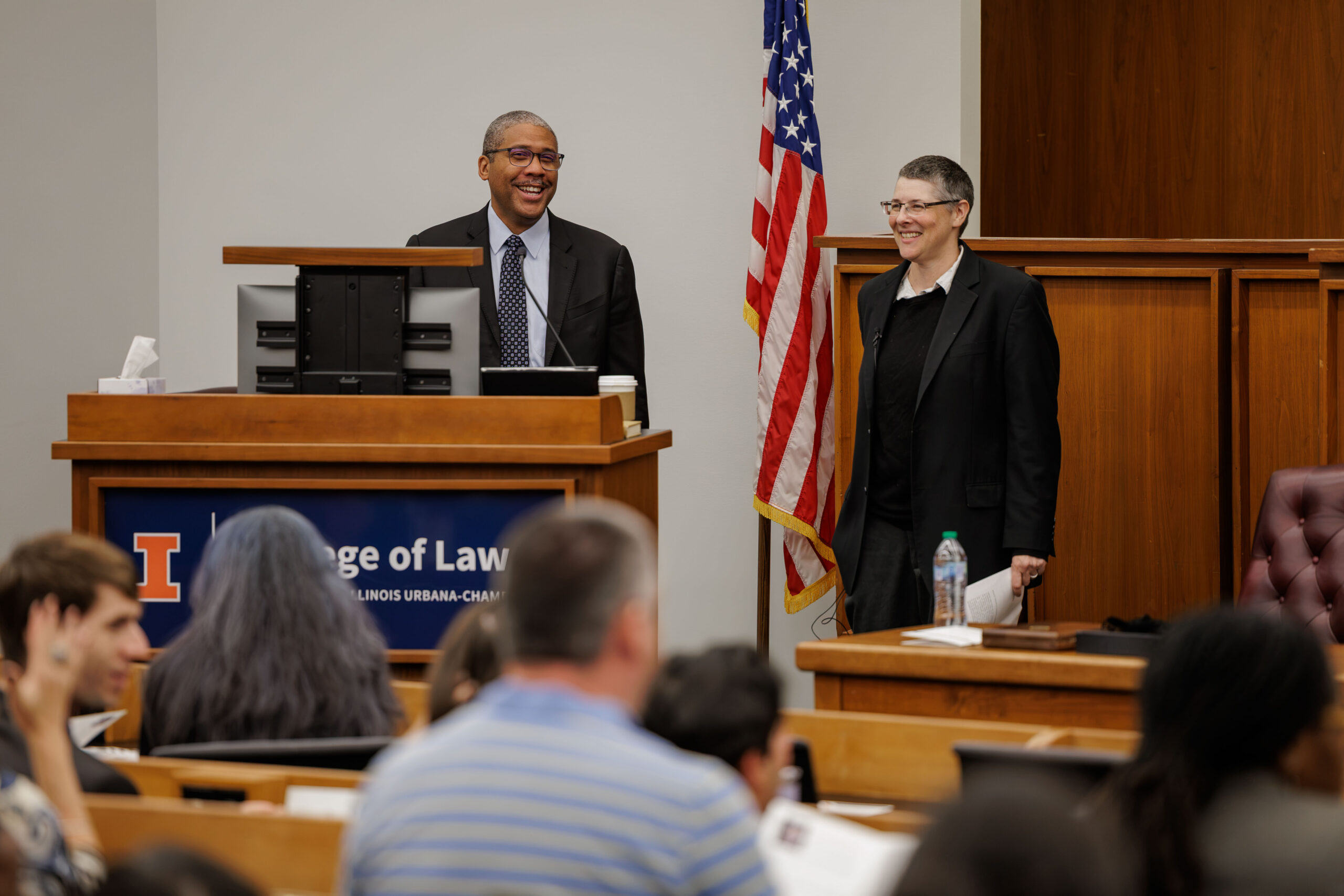
Professor Heidi Hurd delivered an invited lecture, titled “Escaping anthropocentrism in the anthropocene,” as part of the Illinois-Luxembourg doctoral research exchange program. Three of Illinois JSD students, Thallyta Pedroza Ferreira Cavoli, Edna Obiri, and Yuyue Zhong, also presented their work internationally as part of the exchange.

Sherkow provides Master Class presentation

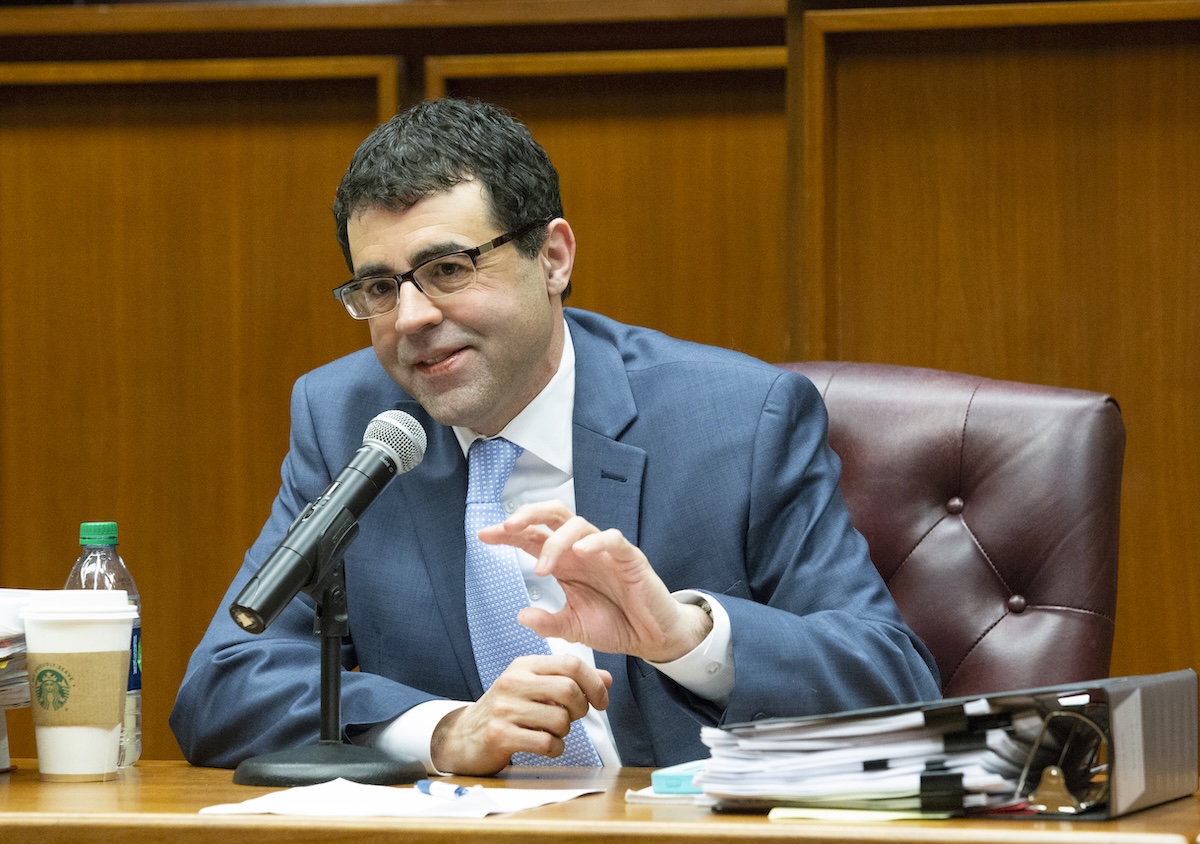
In October, Professor Jacob Sherkow gave a Master Class presentation at the University of Copenhagen on Advanced Biotechnology and Advanced Regulation, that assessed recent biotechnological advancements with regulatory paradigms in the United States and the European Union. The class is a tuition-free, ten-session online program for legal, medical, scientific, and policy professionals working at the frontier of health & life-science innovation. Each class consists of a 3-hour session of expert teaching with case discussion and a question and answer session.

Sherkow helps correct record on peptides

Influencers have shared viewpoints widely on peptides across the internet, and recently a panel that advises the FDA voted to loosen restrictions on vetting of experimental peptides. To help consumers understand fact from fiction on peptides, USA Today highlighted the myths and red flags around these drugs. Professor Jacob Sherkow lent his expertise to the article, helping to dispel falsehoods.

Chemistry World quotes Sherkow on Merck antibiotic withdrawal

Merck & Co.’s decision to discontinue its intravenous antibiotic combination Recarbrio has led to a shortage of medicine used to treat antibiotic-resistant infections. In dissecting the issue, Chemistry World quoted Professor Jacob Sherkow, an expert in patents, about whether a generic drug could be manufactured to make up for the shortage. “These are very complicated drugs to manufacture, often needing their own manufacturing facility to avoid cross-contamination, which is an expensive endeavor for a generics company,” he said.

Lawsky invested as L.B. Lall and Sumitra Devi Lall Professor of Law

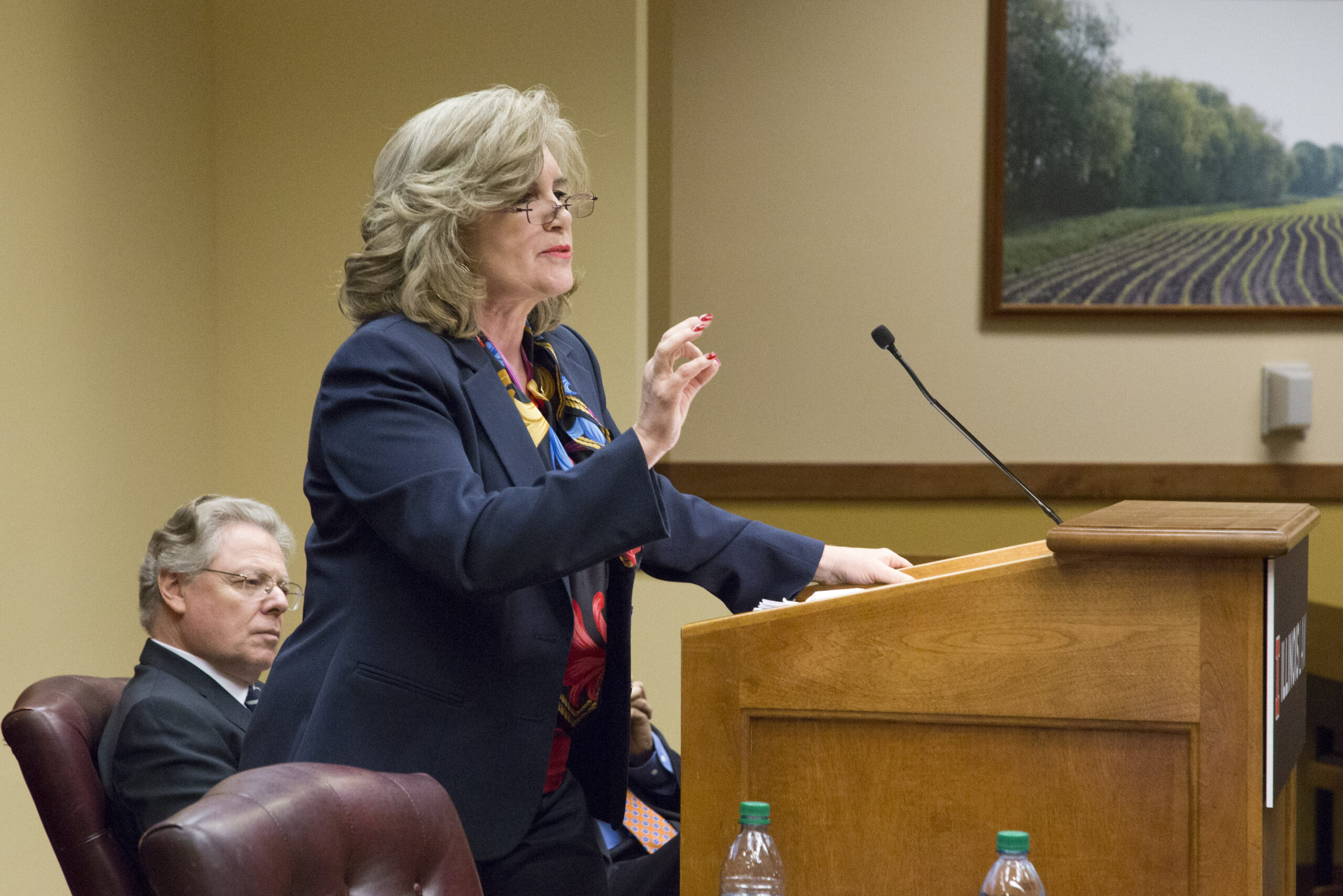
On October 13, 2026, Sarah Lawsky was invested as the L.B. Lall and Sumitra Devi Lall Professor of Law in a ceremony at the College of Law Building. At the ceremony, Dean Jamelle Sharpe hailed Professor Lawsky for the way she has endeared herself to the faculty and the University of Illinois community. He shared a quote from her peer, Professor Lesley Wexler, who said Lawsky is “deeply committed, deeply curious and willing to keep digging and tweaking until she’s satisfied she has really addressed the problem at hand…. I’m often reminded how thrilled I am Sarah joined us: thrilled as a colleague and thrilled as a friend.”

Professor Lawsky joined the University of Illinois College of Law faculty in 2025. She studies tax law, computational law, and the intersection of the two. Her recent work focuses on the formalization of tax law. Professor Lawsky’s research arguing for using a particular nonstandard logic to formalize tax law is the conceptual foundation for the domain-specific programming language Catala, which is the project of a team of computer scientists and lawyers. Before joining the University of Illinois, Professor Lawsky taught at Northwestern Pritzker School of Law, UC Irvine School of Law, and George Washington University Law School. Before entering academia, she worked as a tax lawyer for large law firms.

Mazzone speaks with Brazilian outlet on midterm elections

Intrigue in the 2026 United States midterm elections is international, and to satisfy the curiosity of those abroad Professor Jason Mazzone spoke with the Brazilian outlet Correio Braziliense, the largest daily newspaper in Brasilia. “The key factor in the outcome in the midterms is going to be voter turnout. Democrats are poised to vote in large numbers. It will take high turnout by Republican voters in key states and districts for the Republican party to hold a majority in Congress,” he told them.

Thomas documentary set to premiere at DOC NYC film festival

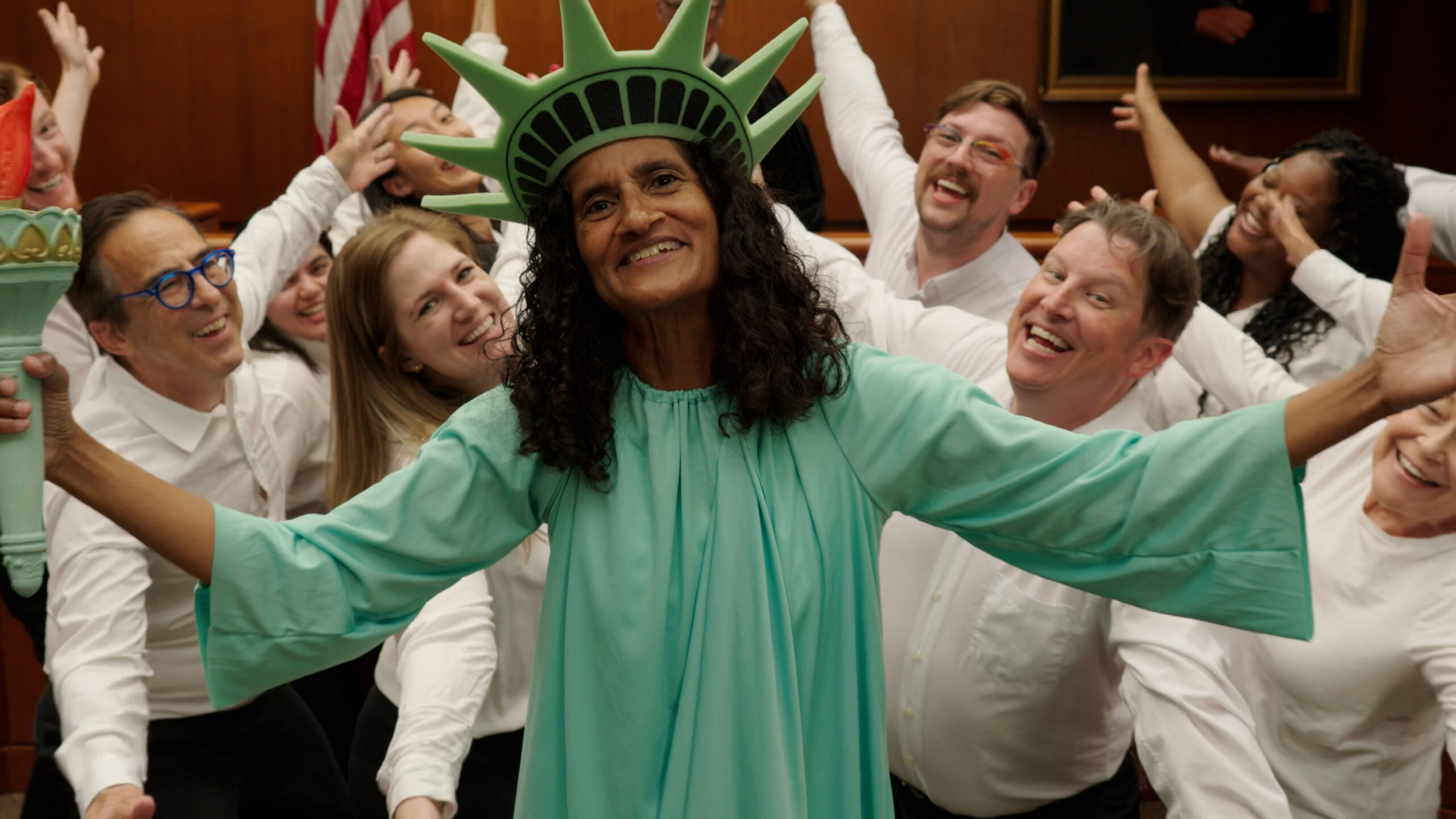
A project ten years in the making, Professor Suja Thomas’s documentary “The Best Justice System in the World” will have its premiere at the prestigious DOC NYC film festival this month.

Taking a light-hearted approach to a serious issue, Thomas aims to uncover the ways the government and corporations strip us of our right to a jury trial. Unafraid to ask provocative questions up and down the chain of power, she uses humor and irreverence to tell the stories of real people who have been negatively impacted by our justice system while weaving in her personal journey as a lawyer and an investigator exposing the dire consequences of losing the jury. 

“After dedicating my work to this issue for many years, including writing articles, books, and op eds, I wanted to expose this problem to a much larger audience—using storytelling and humor. By bringing the story into a new format–documentary film–I seek to bring my decades-long legal work to a medium that can be experienced by the broader American public. My goal was to make an entertaining film that includes emotional stories of characters who have suffered in the justice system,” Thomas said.

The film will premiere Sunday, November 15, at the Village East by Angelika, with a second showing on Monday, November 16, at the IFC Center. Online screenings will also be available from November 16-29.

Sixth Judicial Circuit honors Family Advocacy Clinic with award for pro bono services

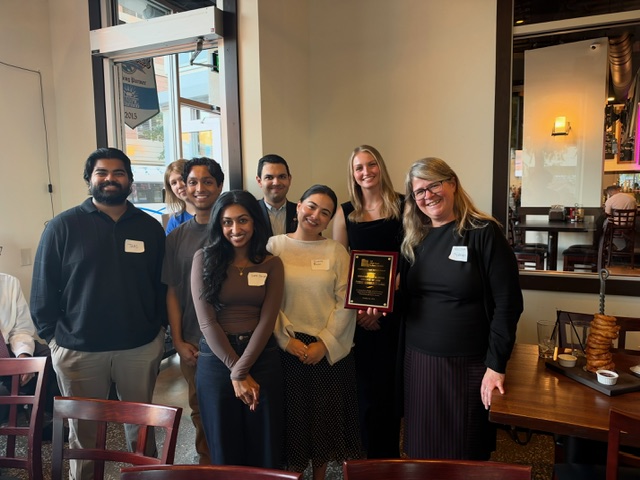
As part of the Public Interest Law Initiative’s Pro Bono Week, the Family Advocacy Clinic was awarded the Community Legal Services Award from the Sixth Judicial Circuit Pro Bono Committee. The award recognizes work supporting the community through outstanding pro bono service, which students provide for parents and children in abuse and neglect cases in Champaign County that goes above and beyond course credit.

Every semester, student workloads far exceed the required 225 hours of service per student; in the year for which this award was granted, Illinois Law students worked 1,190 hours beyond the required hours to provide free legal services in the community.

Clinic director Melissa Frydman and several student clinicians were able to attend a celebratory event and accept the award, during which Frydman said, “This award recognizes all the students’ hard work to serve our clients and provide the best possible legal representation to families most in need. And, it demonstrates the importance of pro bono work and starts our students out on the path to committing to engage in pro bono work throughout their careers.”

Illinois Law launches online Master of Science in Law and stackable graduate-level certificates for working professionals

The College of Law at the University of Illinois Urbana-Champaign now offers an online Master of Science in Law (MSL) and seven graduate-level certificates, with courses beginning in Spring 2027. Built for working professionals who need legal knowledge but do not intend to practice law, the new programs are flexible, accessible, affordable, and 100% online.

“Increasingly, professionals across a variety of sectors need legal fluency to be effective in their positions,” said Jamelle Sharpe, Dean of the College of Law. “Because the traditional legal education model was not designed to meet their needs, we wanted to create opportunities for upskilling that would help more people advance in their careers. These new programs have been developed with today’s working professional in mind. The topics are extremely timely, the pace is flexible, and the cost puts these programs well within reach of busy professionals looking for an excellent education at an affordable price.”

The online MSL builds applied legal knowledge in AI governance, cybersecurity, business law, corporate governance, and employment compliance, and can be completed in as little as 18 months. Students may pursue a concentration in Tech & Privacy or Business Compliance or choose from elective courses to complete the degree. No LSAT, GRE, or other graduate school exam is required for admission. The $90 MSL application fee is waived for applications received by December 15.

For learners who are not yet ready to commit to the full degree, the College also offers graduate-level certificates. Each certificate takes three courses and can stand alone or stack toward the online MSL, so students can earn valuable credentials that help them move ahead professionally even before they finish the degree. As with the MSL, no graduate school exam is required, and there is no fee to apply for a certificate. The seven certificates focus on high-demand professional skill areas:

“Legal knowledge shapes nearly every professional decision, but for most people it has stayed locked inside a three-year degree built for future lawyers,” said Rob Kar, Associate Dean for Curricular Innovation and Director of the Online MSL Program. “We built these programs from the ground up for non-lawyers, with all of the excellence and rigor of an Illinois Law program. Our students learn to spot legal risks earlier, communicate more effectively with legal counsel, and integrate legal advice into broader strategic decisions in ways that add value to their organizations and make them more confident professionals and leaders.”

Individual online courses can also be taken for credit as a non-degree student. Those credits may later be applied toward a certificate or the online MSL. In addition, Illinois students, faculty, and staff have free access on Coursera to sample videos and knowledge checks from select MSL courses. These open courses are a good way to build basic legal knowledge and explore a subject before committing to a certificate or degree. For more information and to apply, visit online.law.illinois.edu.

Mazzone speaks about election crime with ABC 7

After the Department of Justice charged 16 people with illegally voting in the last election, ABC 7 in Chicago turned to Professor Jason Mazzone for context. “There’s really no evidence that there are large numbers of people voting, who are not supposed to be voting,” Mazzone said on the broadcast. The charges, if proven to be true, for 16 out of 154 million people who voted in the election represents 0.0000001 percent of the total, which Mazzone described as “essentially zero fraud.”

College of Law
504 East Pennsylvania Avenue
Champaign, IL 61820
(217) 333-0931