Wilson discusses conversion therapy case on Political as Heck Utah podcast

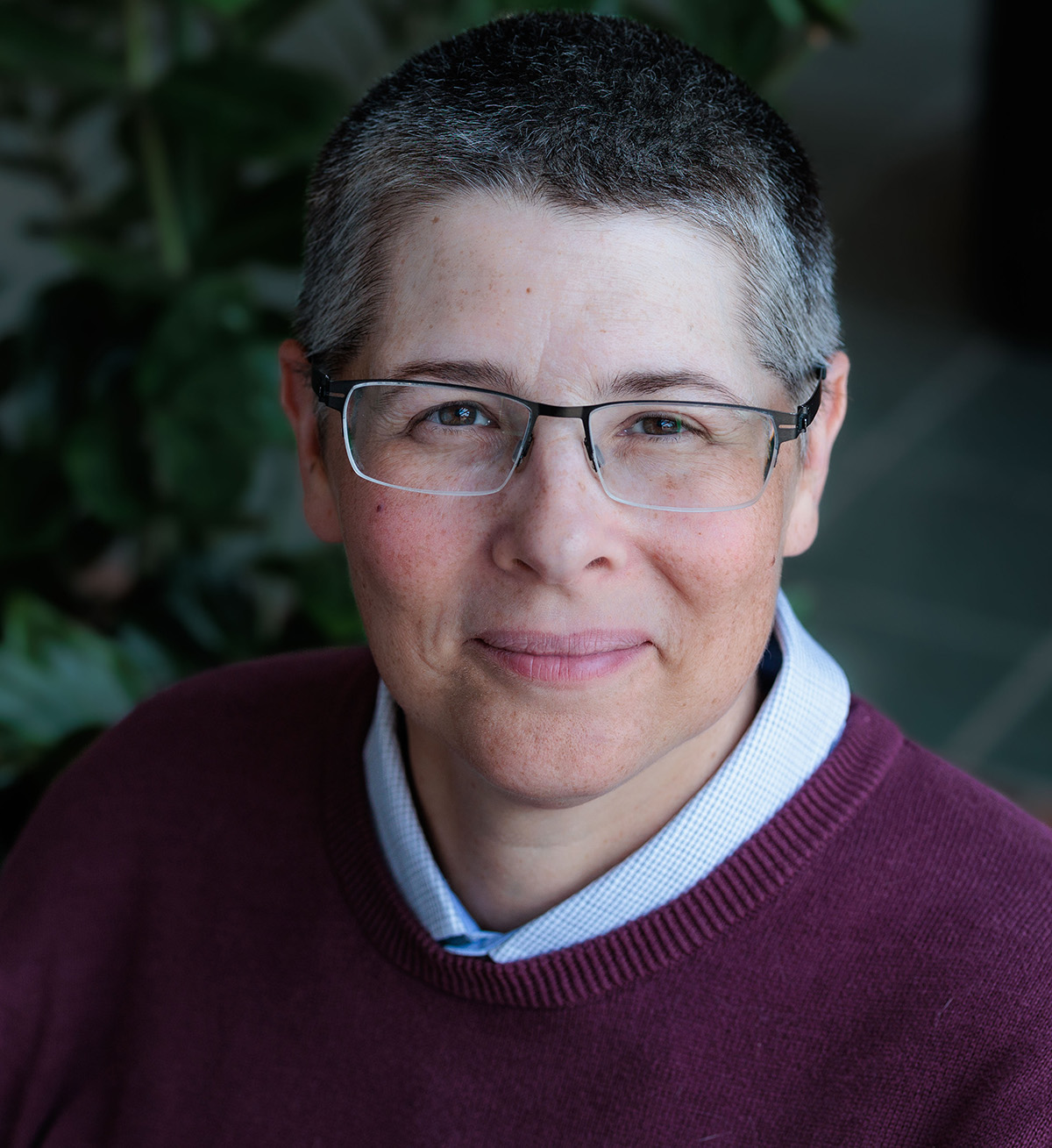
Professor Robin Fretwell Wilson joined Utah state representative Mike Petersen on the Political as Heck Utah podcast for a conversation about the conversion therapy case that was recently decided at the U.S. Supreme Court. They spoke about the history behind Utah’s own conversion therapy law, how the decision in the Supreme Court case might impact it, and more.

Sherkow to speak about indirect patent infringement at 15th Waseda-Penn Global Patent Law Conference

On Monday, June 1, Professor Jacob Sherkow will deliver a lecture at the 15th Waseda-Penn Global Patent Law Conference in Japan. His talk will introduce the fundamentals of indirect patent infringement under U.S. law, with a focus on inducement doctrine under 35 U.S.C. § 271(b). Drawing on recent litigation and scholarship — including the “infringement by label” debate highlighted in the Supreme Court case Hikma v. Amarin — the talk will critically examine how current case law risks expanding inducement liability beyond its traditional requirement of active encouragement and causation. In doing so, the lecture will highlight broader questions about the proper limits of indirect infringement and the role of regulatory contexts in shaping liability—issues that also resonate in ongoing Japanese debates on the scope and structure of secondary patent liability.

New paper from Lawsky: “Constructing Deductions”

Professor Sarah Lawsky, along with co-author Leandra Lederman, published the paper “Constructing Deductions” on SSRN.com. The abstract follows:

This Essay identifies drafting “building blocks” that are present in the Internal Revenue Code and that are used to construct many of the deductions available to individuals. The Essay represents these building blocks using mathematical formulas and graphically, and it then shows how the building blocks are combined to create complex deductions. These formalizations and visualizations yield insight into statutory drafting choices. They also reveal “negative space”–that is, ways that federal income tax deductions could be drafted but are not.

Gerke publishes article in prominent gastroenterology journal about human deskilling in medical AI

In a new co-authored article for Nature Reviews Gastroenterology & Hepatology, Professor Sara Gerke explores the risks of “deskilling” for physicians as the use of AI proliferates in the practice of medicine. Gerke and her co-authors also explore whether such systems violate the European Union Artificial Intelligence Act, the world’s first comprehensive regulatory framework on artificial intelligence.

J. Ross book reviewed in American Journal of Comparative Law

The book “Making Sense of Youth Crime: A Comparison of Police Intelligence in the United States and France,” co-authored by Jacqueline Ross and Thierry Delpeuch, was recently reviewed in the American Journal of Comparative Law. The reviewer offers high praise, stating, “One cannot fail to appreciate the brilliant achievements of Ross and Delpeuch. This book clearly conveys the complexity of a constructive reform proposal, intended to promote the analytical and effective use of intelligence-led policing through a variety of intelligence regimes, particularly in response to composite and persistent forms of crime.”

Mazzone weighs in on lawsuit brought by an Illinois judge against justices of the Illinois Supreme Court

Writing for Justia Verdict, UC Davis Law professor Vikram David Amar and Illinois Law professor Jason Mazzone discuss the federal lawsuit brought by former Illinois judge James Brown against the Justices of the Illinois Supreme Court following his removal from a temporary recall appointment. Professors Amar and Mazzone argue that while judicial immunity likely bars the plaintiff’s claims for monetary damages, the case presents complex, unresolved questions regarding the application of First Amendment speech protections to judicial appointments and the extent to which states may manage their own judiciaries.

Lawless speaks to New York Times about Spirit Airlines shutdown

After struggling financially for years and failing to secure a government bailout, Spirit Airlines announced that it would begin the process of shutting down in early May. Investors were strongly opposed to the government bailout, especially those that had made Spirit debtor-in-possession loans. Such loans have high interest rates, and the investors who own them are paid back before other creditors. The investors also have the right to object to changes, including new loans, that could hurt their interests.

Speaking to the New York Times, bankruptcy expert and professor Bob Lawless compared the rights of these lenders to an oft-cited metaphor of hikers standing on a hill. “The new lender says, ‘We’re on this mountain trail, and there’s plenty of room for you to go out and stand out there closer to the edge of the cliff,’” Lawless said. “And the existing lender has a good response, which is that if there’s so much room, why don’t you go stand out there?”

Illinois Law names 85 employers to 2025–26 Employer Honor Roll

The University of Illinois College of Law recently published its 2025–2026 Employer Honor Roll, recognizing employers who have regularly hired recent College of Law graduates. This past year represents a significant milestone in the history of the Honor Roll, with a record-breaking number of employers—85 in total—being recognized.  This year’s Honor Roll features an impressive and diverse array of employers, including law firms of many sizes; a wide variety of federal, state, and local government agencies; public interest employers; and courts. Combined, Honor Roll employers have hired approximately 270 recent College of Law graduates in the Classes of 2023, ’24, and ’25. With the support of Honor Roll members and hundreds of additional employers, the College of Law has continued to deliver a strong array of opportunities for its graduates.

“The College of Law is humbled to have such a diverse and impressive group of employer partners,” Jamelle Sharpe, dean of the College of Law, said. “We are especially pleased to have so many employers included on the Honor Roll this year. It’s a testament to the quality of our graduates and their ability to add value on day one.”

First created in 2014, the Honor Roll has been updated annually since. This year’s group includes many long-time honorees, as well as a large number of new employers. 

“We appreciate the chance to be of service to so many great legal providers,” noted Greg Miarecki, the College’s executive assistant dean for Career Planning and Professional Development.  “We are excited to continue working with our Honor Roll employers and all of our employer partners in this dynamic and challenging recruiting environment.”

In 2025, the College of Law introduced the first annual Employer Honor Roll luncheon, which welcomed more than 100 attendees from over 50 different employers.  Employer Honor Roll members listed below will receive their awards at the next Honor Roll luncheon, currently slated for the fall of 2026.

DIAMOND

Katten Muchin Rosenman LLP
Kirkland & Ellis LLP
Sidley Austin LLP

PLATINUM

Benesch
Chapman and Cutler LLP
Circuit Court of Cook County
Del Galdo Law Group, LLC
Heyl Royster
Husch Blackwell LLP
Jenner & Block LLP
Jones Day
Law Office of the Cook County Public Defender
Litchfield Cavo LLP
McDermott Will & Schulte
McGuireWoods
Meyer Capel
Morgan, Lewis & Bockius LLP
Office of the Cook County Public Guardian
Office of the Illinois Attorney General
Reed Smith LLP
Sheppard, Mullin, Richter & Hampton LLP
University of Illinois – Office of University Counsel
Wilson Elser
Winston Taylor

GOLD

Champaign County State’s Attorney’s Office
Dickinson Wright PLLC
Donohue Brown Smyth LLC
Foley & Lardner LLP
Foran Glennon Palandech Ponzi & Rudloff PC
Greenberg Traurig, LLP
Ice Miller LLP
Internal Revenue Service
Jackson Lewis PC
Office of the State Appellate Defender
Polsinelli
Quarles & Brady LLP
U.S. Army JAG Corps
United States Bankruptcy Court for the Northern District of Illinois
United States District Court for the Central District of Illinois
Vedder
WilliamsMcCarthy LLP

SILVER

Akerman LLP
ArentFox Schiff LLP
Barnes & Thornburg LLP
Beermann LLP
Champaign County Public Defender’s Office
City of Chicago Department of Law
Crowell & Moring
DuPage County State’s Attorney’s Office
Dykema
Faegre Drinker Biddle & Reath LLP
Fish & Richardson P.C.
Fox Rothschild LLP
Grant Austin, LLC
Hall Prangle LLC
Illinois Appellate Court, First District
Illinois Appellate Court, Fourth District Research Department
Jackson LLP
Johnson & Bell, Ltd.
K&L Gates LLP
King & Spalding
Latham & Watkins LLP
Levenfeld Pearlstein, LLC
Lewis Brisbois Bisgaard & Smith LLP
Macon County Public Defender’s Office
Maron Marvel Bradley Anderson & Tardy LLC
Mayer Brown
McAndrews, Held & Malloy, Ltd.
McGuire Law, P.C.
Morgan & Morgan, P.A.
National Labor Relations Board
Neal, Gerber & Eisenberg LLP
Nyhan, Bambrick, Kinzie, & Lowry
Patzik, Frank & Samotny Ltd.
Peoria County State’s Attorney’s Office
Ropes & Gray LLP
Seyfarth Shaw LLP
Squire Patton Boggs
Swanson, Martin & Bell, LLP
Thomas Mamer, LLP
Thompson Coburn LLP
Troutman Pepper Locke
United States Bankruptcy Court for the Central District of Illinois
Venable LLP
Willkie Farr & Gallagher LLP

The complete list of Honor Roll employers, along with the methodology for selecting employers, can be found at www.law.illinois.edu/careers/employer-honor-roll.

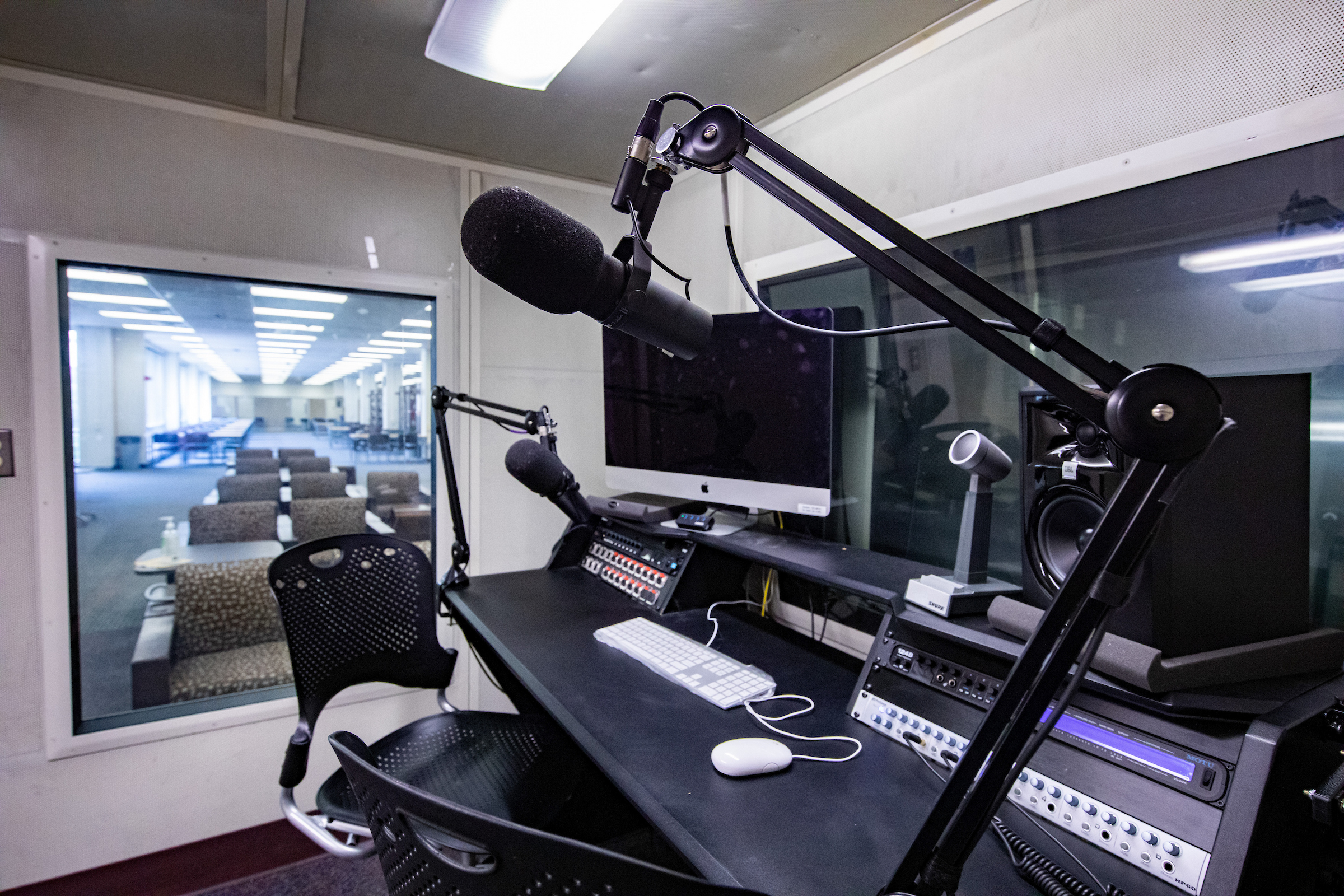
Illinois LawCast: First-Year Experiences

The first year of law school is a unique experience. Though some students may have the option to enroll in pre-law minor, there is no requirement for any specific curriculum to be admitted to law school, which makes the first year a foundational year that can be challenging, surprising, and inspiring in a short period of time. For this episode, we gathered a few talented and intelligent members of the Illinois Law Class of 2028 to discuss their 1L year as it comes to an end. Guests in this episode are Blessing Agyare, Liam Davis, and Darius Johnson, who discussed why they chose to study law at Illinois, what surprised them about their first year, what they’ll take with them as they go forward, and more.

If you’d like to know more about student life at Illinois Law, please check out our website. If you are considering applying, our application is always free—no codes required.

If you have comments or suggestions for the podcast, please contact podcast@law.illinois.edu.

Clinic students earn dismissal of some charges for client

For young lawyers, a first appearance in court is a big deal. Standing before a judge and presenting hours of hard work can reaffirm hopes and dreams or it can alter career trajectories; either way, it is not easily forgotten.

For third-year students Henry Lu and Joseph Saoud, taking part in the First Amendment Clinic offered that chance to get courtroom experience and much more.

“I personally really wanted to get that hands-on experience. I was told before starting that clinic gives students the opportunity to kind of lead their own cases, something that a lot of junior associates won’t be able to get,” Lu said. “We were given that opportunity. We had pretty significant leeway in terms of being able to navigate through the case, and I think that that was a really valuable experience.”

Lu and Saoud were assigned a defamation case involving rival politicians. After their political campaign against each other, one of the politicians filed suit claiming statements from the other politician were defamatory. The First Amendment Clinic pair joined the case in the early stages and worked on a motion to dismiss some or all of the claims as not defamatory as a matter of law.

Both students came to the clinic with a passion for the First Amendment and were excited to tackle a case like this, putting what they’ve studied so diligently in class to practice in a real-life setting. At times the case felt imposing, between the weight of filing documents in court for the first time and working for older professionals while still a student. Saoud described it as a “different kind of pressure.”

“There’s something about the stakes being so much higher when you know that this is a consequential piece of paper I’m working on right now and if I don’t give it my all this can have really big implications for someone’s life,” he added. “I think that pushed us to produce our best work when maybe in class we would have been just tired and not wanting to put in more work. But it was great. I feel so much more confident now.”

After their day in court, Lu and Saoud were able to get four-and-a-half of the 12 statements in the suit dismissed for their client, a result both felt proud to have accomplished. Saoud summed it up by saying, “If success is all the learning that we did, absolutely it was successful.”

Though helping their client was the most important thing, Lu and Saoud agreed the work was important for them personally. The experience writing briefs and learning administrative parts of the job, such as tracking hours, will be greatly beneficial in the very near future after the duo graduate and begin their careers. For all those reasons, the First Amendment clinic experience is one they would recommend to any student.

“I think the First Amendment Clinic was one of the most valuable experiences of my law school journey,” Lu said. “You spend so much time in the classroom in law school, and you never actually get to participate in the practice of law, which is what you go to law school for in the first place. Joseph and I talked about this a lot, but we always recommend our friends to apply for the First Amendment Clinic and we tell them about our experience. I think a lot of people would definitely benefit from it.”

Learn more about the First Amendment Clinic at Illinois.

College of Law
504 East Pennsylvania Avenue
Champaign, IL 61820
(217) 333-0931