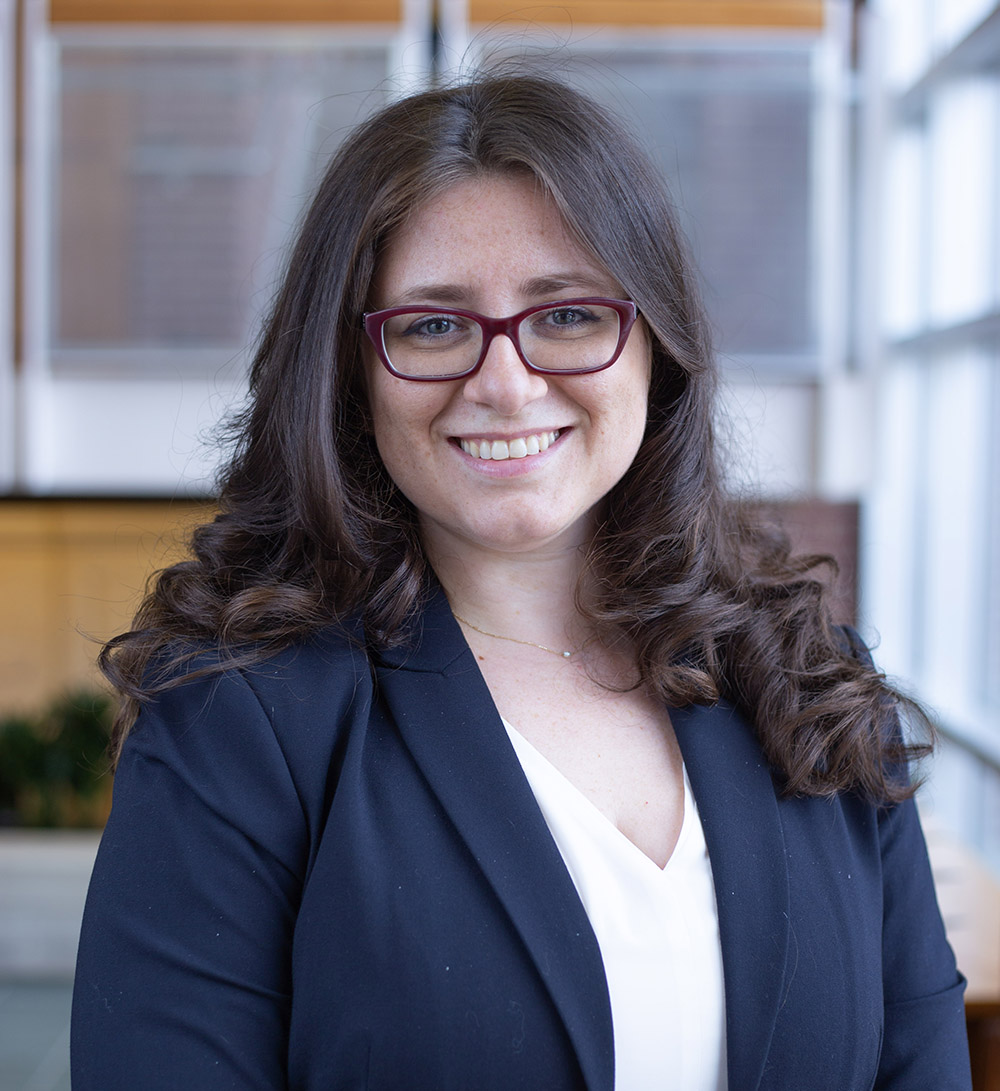
American Bankruptcy Institute Journal publishes article from 3L Alban Beqiri

Congratulations to 3L Alban Beqiri on the publication of his article, “When a Nonfiling Spouse’s Support of an Adult Child Prevents Relief,” in the American Bankruptcy Institute Journal. In his article, Beqiri takes a deep look at the issue of supporting adult children while pursuing bankruptcy, writing “If these payments for adult children are not considered expenses for dependents when the debtor pays them, then they should be treated the same when it is the nonfiling spouse that is paying.” The publication of this article marks the second by a member of the Class of 2024, following Alec Klimowicz’s article earlier this academic year; it is a rare feat to have two articles published by members of the same class and we are very proud of their accomplishment.

Rochelle’s Daily Wire analyzes bankruptcy court ruling citing Brubaker

The strength of Professor Ralph Brubaker’s scholarship provided “considerable force” in the mind of Bankruptcy Judge J. Craig Whitley of Charlotte, N.C., and he cited Brubaker’s work extensively when denying a motion to dismiss a pair of “asbestos” chapter 11 cases where the family of companies could pay $250 million in current and future liability. In Rochelle’s Daily Wire from the American Bankruptcy Institute, the decision is analyzed and Brubaker added his own commentary. Though this case does not discuss the Purdue Pharma case before the Supreme Court, the author notes that it has overlap in bankruptcy courts not sanctioning nonconsensual, nondebtor, third-party releases.

U.S. Bankruptcy Court extensively cites Brubaker in denying Texas Two-Step ploy

In late December 2023, U.S. bankruptcy court in North Carolina denied motions to dismiss the Texas Two-Step mass-tort bankruptcy cases of entities created to resolve the asbestos liability of the Trane companies. This type of maneuver involves splitting a company into two, moving the liabilities to one company, and then seek bankruptcy protections to absolve that company of liability. In the opinion (pages 32-39) denying the Trane companies the ability to execute this maneuver, the bankruptcy court extensively cites to and quotes from three of Professors Brubaker’s articles on the subject: (1) “The Texas Two-Step and Mandatory Non-Opt-Out Settlement Powers,” in the Harvard Law School Bankruptcy Roundtable; (2) “Assessing the Legitimacy of the ‘Texas Two-Step’ Mass-Tort Bankruptcy,” in the Bankruptcy Law Letter; and (3) “Mandatory Aggregation of Mass Tort Litigation in Bankruptcy,” in the Yale Law Journal Forum.

End of eviction moratoria did not increase renter anxiety, new report from Mazzone and Wilson finds

When the COVID-19 pandemic disrupted life in unprecedented ways, one of the most consequential was the suspension of eviction hearings and moratorium on evictions imposed by the CARES Act. When evictions proceeded again, many predicted a housing crisis would follow, but this was not borne out in Census Bureau survey data from 2020 through 2023, Likewise, anxiety about eviction among renters never reached levels feared and has fallen as the moratoria recede into history. Professors Jason Mazzone and Robin Fretwell Wilson explore these findings in a new Policy Spotlight.

Read the full PDF on the Institute of Government and Public Affairs website.

Shapiro talks campus free speech with Illinois News Bureau

When it comes to speech, “There is legal freedom and there is practical freedom,” Professor Lena Shapiro explained. The director of the First Amendment Clinic explained how the freedoms related to speech in the United States are applied on college campuses, especially in the wake of the October 7 attacks in Israel and the ensuing war. “Most expressions commonly identified as “’hate speech’ are protected by the First Amendment and cannot lawfully be censored, punished or unduly burdened by the government – including by public colleges and universities,” she said.

Entrepreneurial spirit propels Epstein ’04 to top of sports and entertainment field

Tim Epstein ’04 wanted to be Corbin Bernson in LA Law. Watching television with his mother, he saw the good-looking actor riding around in convertibles and having fun in the courtroom and identified something he’d like to work toward.

“I wanted to be a lion in the courtroom,” he said. “My second summer clerkship, at Corboy & Demetrio, I realized that the lions of the court, the real trial lawyers, they die with their boots on. So, there wasn’t going to be an opportunity for me to rise through the ranks quickly. And I didn’t want to do that. I wanted to rise quickly, and I wanted to be entrepreneurial.”

Epstein was no stranger to cutting his own path, however. As a student at Illinois, he enjoyed the extracurricular offerings, but couldn’t find one that fit him, so he created his own. The Irish Law Students Association was his creation, an outlet for him to do things like service trips to Appalachia and social outings like marching in the Chicago St. Patrick’s Day Parade, where he met and had a beer with a young candidate for Senate named Barack Obama.

Using the same spirit he put into creating the Irish Law Students Association, Epstein bent his will toward carving out a niche in sports and entertainment law where he saw a void. As a 3L, having already had a note selected for publication in the Elder Law Journal, he focused on research that would become a law review article accepted by the University of Virginia on “disappointment lawsuits” in sports. Shortly after graduating, while doing the work and learning how to be a lawyer (“my day job”), he also spent time researching and getting in on the ground floor of the emerging field of sports law.

That independent sports law work at the College of Law and in his early years of practice led to Epstein rising through the ranks to Duggan Bertsch’s sports law practice. There, he does a bit of everything, from Olympic arbitrations to NCAA enforcement cases. But sports wasn’t the only area in which he saw opportunity.

“I got great advice from one of my mentors at Donahue Brown, who told me, ‘If you want to be a partner in a law firm, the fastest path to partnership is to do something that other people are not doing,’” Epstein said.

Major music festivals were in a nascent stage in 2004, when a friend asked Epstein to help him with the legal aspects of organizing a festival in Chicago. He jumped at the chance to help with the Pitchfork Music Festival, which has attracted thousands of music fans to Chicago annually and spawned new iterations around the globe. Working on the early installments, however, helped establish Epstein within the field. His work diligently poring over contracts with artists, vendors, and sponsors earned him a reputation for great work and a foot in the door with the many promoters and festivals that have sprung up in the years since.

Now, along with his role chairing Duggan Bertsch’s Entertainment, Events, and Festivals industry group, he leads a team that provides counsel to nearly all of the independent major festivals in Chicago and many more across North America. He represents over 100 festivals, over 100 live event promoters, and a couple hundred venues.

“I look at myself, really, as an entrepreneur and the majority of my clients are entrepreneurs. We really regard ourselves as part of our client’s team, not just as some fungible piece,” Epstein said. “I have relationships with brands and vendors, I have my own ticketing terms with all the major ticketing platforms. I have terms in place with all the major music agencies. And so, what it does is it provides my clients not just substantive expertise, but it gives them leverage that they wouldn’t otherwise have unless they were a Live Nation or AEG.”

Building those relationships and becoming an asset for clients required Epstein to use his innate will and determination, skills he honed at the College of Law. The challenge of earning a degree at Illinois remains vivid to Epstein and an important factor in helping him on the path to becoming one of Billboard’s top music lawyers.

“The academic rigors, quality of the fellow classmates, and the quality of the faculty and dedication to teaching,” he explained. “You have so many people fully dedicated just to the art of teaching…not only are you more focused on the academic side, but your fellow students are as well. Being all together in C-U for those three years provided a great foundation.

“I think the relationships that I developed with faculty and with fellow students at Illinois were 10-20 times better than what I’ve seen from any of my other fellow attorneys that they experience in their law schools,” Epstein added.

When students ask him for advice, at the Sports & Entertainment Law Society event he spoke at this month or in classes he teaches at Loyola University School of Law (where he has been adjunct faculty for almost 15 years), he cautions them against seeking out a job because of their personal enthusiasm for the subjects. In his entertainment practice, Epstein makes a point to only represent the buyers of talent and to avoid all work with the talent themselves in order to deliver the best results for his clients. Although he is a sports and music fan himself, he is decidedly not a “fanboy.”

“My enthusiasm for both sports and entertainment law is first and foremost based on development on the ground floor of a practice of law, and not any fandom,” he said.

What Epstein encourages students to do is use their own resolve to find a niche in an industry where they can establish themselves as a powerhouse.

“Don’t start something just for the sake of starting something to say it’s yours. I would say see what is out there and see what is missing or broken and then attack it and make it your own,” he said. 

With a growing list of accolades including a place on Law Bulletin’s Forty Under 40, his sports law practice being ranked among the best, as well as accolades from Billboard for his work in live entertainment, following Epstein’s advice might be a great idea for any young legal mind.

Tim Epstein

Delete

Edit embedded media in the Files Tab and re-insert as needed.

Sherkow speaks at workshop in Tasmania

Professor Jacob Sherkow was invited to speak at the “Regulation of Innovative Health Technologies Workshop,” which took place at the leading Centre for Law and Genetics, University of Tasmania, from November 23-25, 2023. As part of the workshop, Sherkow was the organizer of a session examining patents as regulators of innovative health technologies. The international workshop was attended by leading global health regulation and intellectual property rights scholars to discuss issues at the cutting edge of how we develop, regulate and deliver access to innovative health technologies.

Approval of CRISPR therapy may soon lead to lawsuits according to Sherkow

“I would be surprised, bluntly, if [a lawsuit] does not get filed by the end of this year,” Professor Jacob Sherkow told Politico about the patent battle over CRISPR technology. When the FDA issued approval for the therapy in sickle cell cases, it granted approval to companies that do not hold licenses for CRISPR. As Sherkow explained, the Broad Institute holds the U.S. patent on editing human cells with CRISPR and can sue companies that don’t have licenses for their patents for infringement as soon as a new product comes on the market, which is certain to happen following FDA approval. 

Brubaker tells Bloomberg decision in Purdue Pharma case may have wide implications

In the pending U.S. Supreme Court case regarding Purdue Pharma’s litigation shield for the Sackler family, the decision of the Court could impact widely used non-debtor releases in Chapter 11 bankruptcy cases. Professor Ralph Brubaker suggested to Bloomberg Law the ruling might affect cases involving mass torts, including cases involving the Catholic diocese, Boy Scouts, Rite Aid, and Highland Capital. The decision’s implications may also extend to asbestos-related bankruptcies and the use of non-consensual third-party releases under Section 524(g) of the bankruptcy code.

Second Circuit cites Brubaker in recent decision

Ruling in the case Nine West LBO Securities Litigation, the United States Court of Appeals for the Second Circuit cited Professor Ralph Brubaker’s work on safe harbor rules in the Tax Equity and Fiscal Responsibility Act of 1982. The case revolved around the leveraged buyout of an apparel and footwear company, including brands such as Nine West and Anne Klein, and the later bankruptcy filing of the company’s successor. The Second Circuit determined, based on Brubaker’s scholarship, that payroll transfers made by the company that filed for bankruptcy were not covered under the safe harbor rules and vacated the lower court’s decision regarding those claims. 

College of Law
504 East Pennsylvania Avenue
Champaign, IL 61820
(217) 333-0931