Science quotes Rowell on nuclear energy rule changes

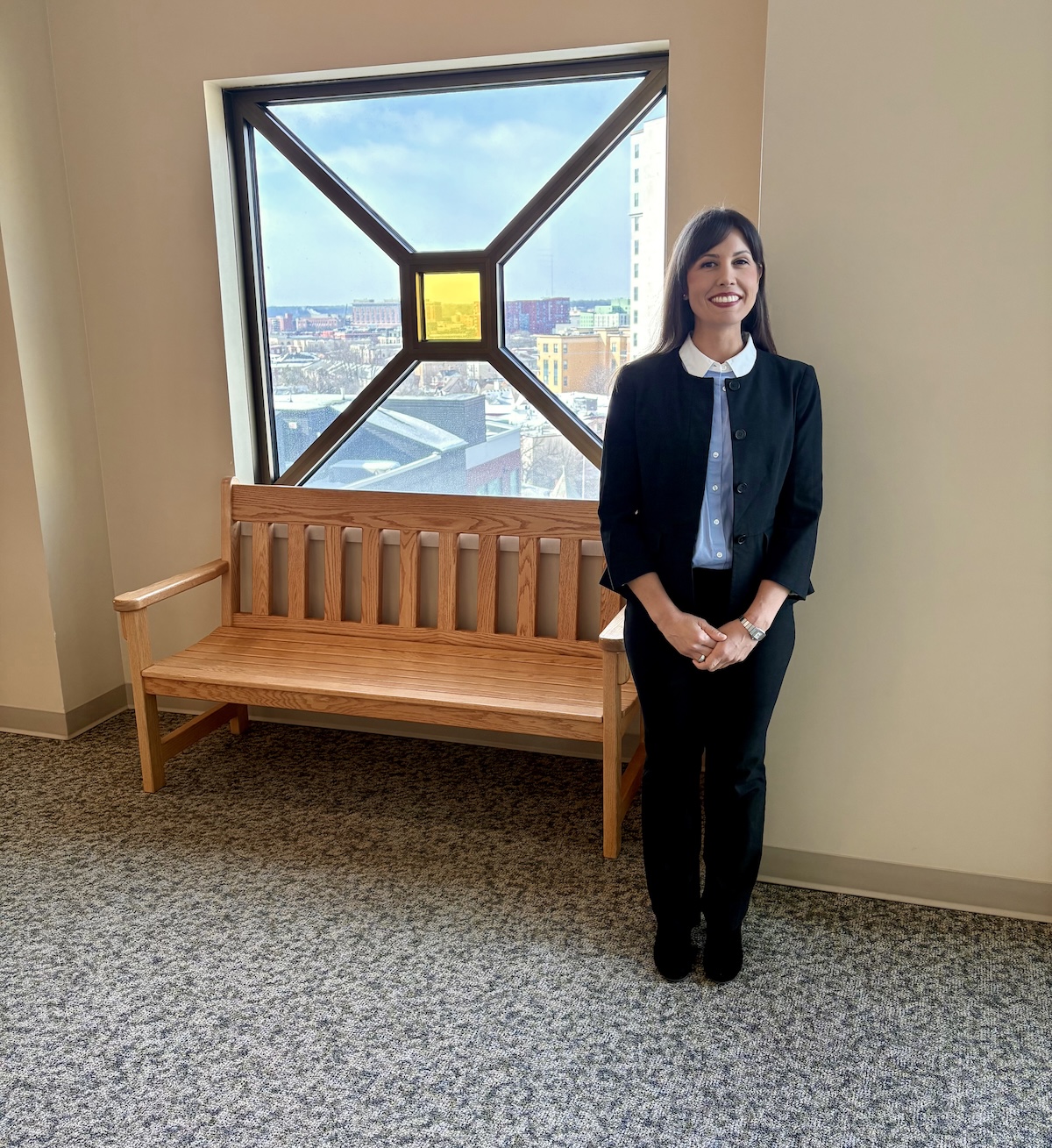
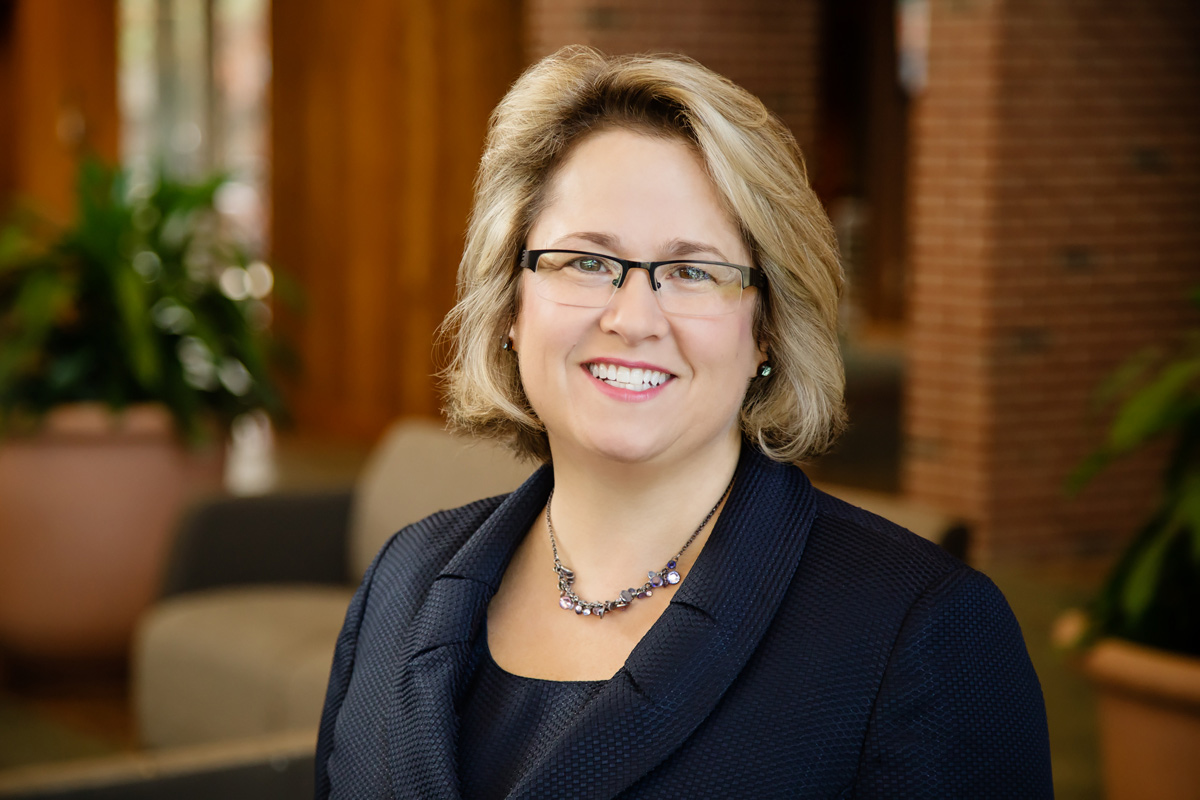
The federal government’s moves to reform the rules surrounding nuclear energy plants might have had the effect of streamlining the process of bringing new reactors online and, thus, creating more nuclear energy for the United States’ power grid. Federal agencies making changes behind closed doors, without input from experts, has chilled scientists, however. Moving quickly and creating uncertainty, Professor Arden Rowell tells Science, could backfire and slow progress.

Brubaker and Lawless add commentary to ABI post on Texas Two-Step bankruptcies

Professors Ralph Brubaker and Robert Lawless were both featured in the commentary featured on the American Bankruptcy Institute’s blog, Rochelle’s Daily Wire. Their commentary discussed the most recent decision in the ongoing controversy over the propriety and legitimacy of so-called “Texas Two-Step” mass-tort bankruptcies. The decision, from the Fourth Circuit, continues to stoke opinion and Lawless writes that it sets up “a Supreme Court decision in the coming years.”

SCOTUS must invalidate birthright citizenship order, Mazzone and Amar write

President Donald Trump issued an executive order that would end birthright citizenship as commonly understood. More than a year later, the Supreme Court is set to hear arguments on the case, and Professors Jason Mazzone and Vikram Amar believe the order should be invalidated. Writing at Justia Verdict, the professors argue, again, that the order violates the first sentence of Section One of the Fourteenth Amendment, and it also flouts the 1952 Immigration and Nationality Act.

Good Morning America quotes Leipold on Justice Dept. cases

The Justice Department’s efforts to return indictments against six members of Congress were turned down by a grand jury in what Professor Andrew Leipold called a “rare” denial. Good Morning America spoke to Leipold for their investigation of the cases, with Leipold commenting, “The most obvious answer is that the government is being aggressive in prosecuting federal crimes, and grand juries are simply not in agreement.”

Sherkow publishes perspective in NEJM

Drug labels required by the U.S. Food and Drug Administration are meant to help ensure safe and effective use of prescription drugs; however, recent court decisions have problematically treated those labels as key evidence in patent infringement cases, with drug companies engaging in what Professor Jacob Sherkow calls “patent gamesmanship” that could potentially limit access to affordable generic drugs. In his latest scholarship, published in The New England Journal of Medicine, Sherkow and his co-authors urge the Supreme Court to address this trend.

Wilson quoted in Salt Lake Tribune for work on Utah bill

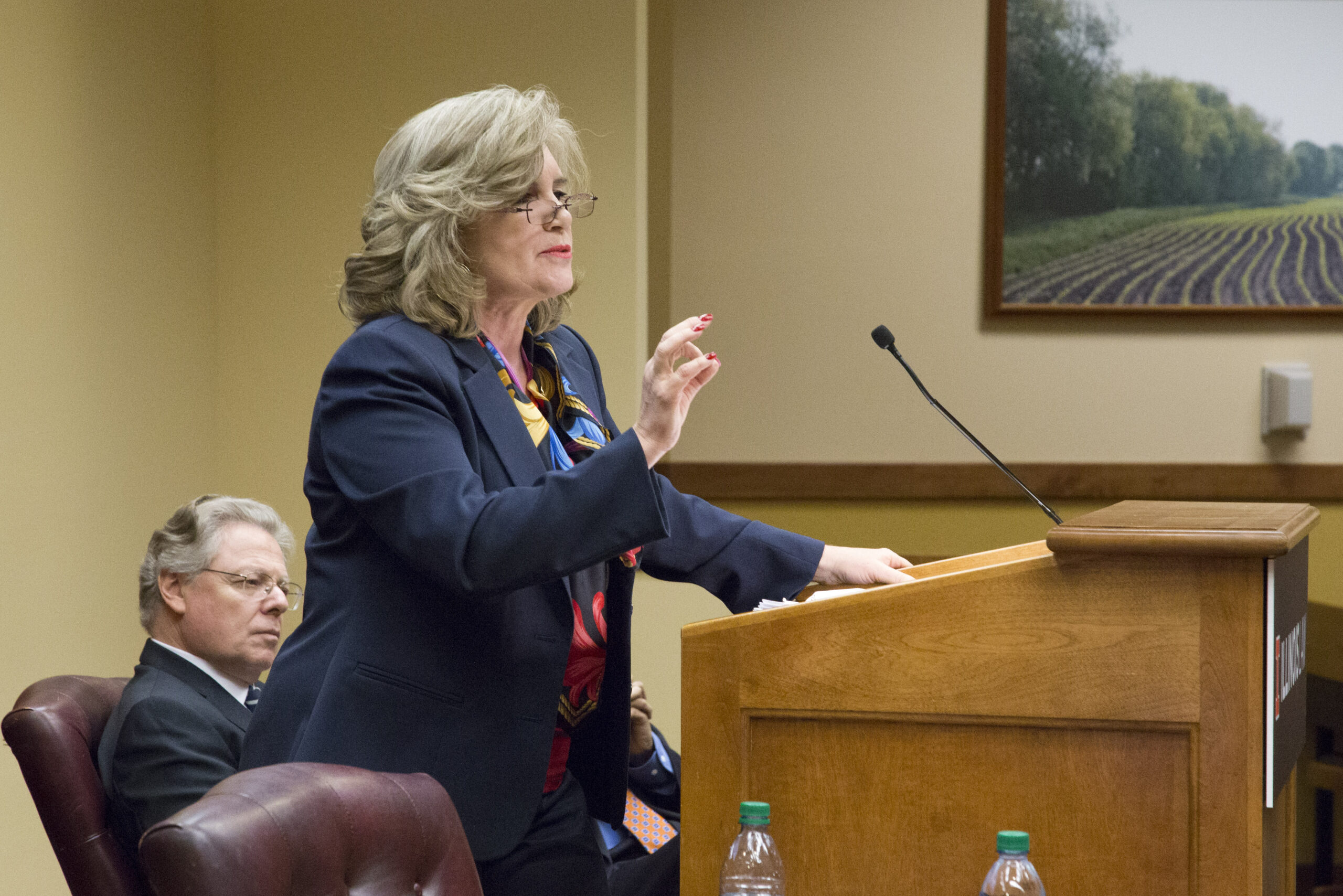
Professor Robin Fretwell Wilson recently helped craft draft legislation with Utah Representative Mike Peterson that would empower college students to opt out of assignments if the coursework violates their “sincerely held religious and conscience beliefs.” She testified before the Utah Senate Education Committee on February 25 at the invitation of Peterson on Utah House Bill 204 and was quoted in an article from the Salt Lake Tribune about the bill.

U.S. not safe for immigrants, Aronson writes

The Trump administration’s immigration crackdown, deploying forces to large cities and deporting individuals without due process, has created a “terrifying and vindictive America,” Professor Lauren Aronson writes in a letter to the editor published by the Chicago Sun-Times. “My heart has been broken over and over again by my clients’ suffering, and the only solace that saved me for the work is the knowledge that the services my clinic provides give these individuals a second chance to live meaningful, productive, and most importantly, safe lives in the United States. I no longer feel like I can offer that,” she continues.

Reuters quotes Mazzone and Amar on ICE lawsuits

As Democrat-led states seek new laws that allow individuals to sue federal agents in response to tactics used by Immigration and Customs Enforcement (ICE), Reuters quotes Professors Jason Mazzone and Vikram Amar on a law that Illinois recently passed. Their scholarship, originally published in Justia Verdict, called the Illinois law “innovative” but “imperfect” as a way to address these concerns.

Illinois LawCast: Studying environmental law in Costa Rica

One of Illinois Law’s areas of strength is environmental law. We routinely offer core courses such as environmental law, administrative law, and natural resources, as well as advanced environmental electives, such as climate change and sustainable development. Where we go the extra mile, literally, is in innovative environmental courses that offer hands-on teaching.

In this episode, Professor Heidi Hurd explains her class, Costa Rica: A Case Study in Environmentally Sustainable Economic Development, a January intersession course that takes students to Costa Rica to learn from politicians and environmentalists and experience the natural world up close. Professor Hurd goes through the history of the class, her favorite memories, and why she feels this course is so important to Illinois Law’s environmental law offerings.

Also joining the podcast are Josh Rosen, a third-year student, and Sophia Abedi, a second-year student, both of whom traveled with Hurd to Costa Rica this past January. They share their experiences and how the course resonated with them in the present and will continue to make a difference in their careers.

For more information about Illinois Law’s commitment to environmental law, please visit our website. For more about the Costa Rica course, see the specific course listing.

If you have comments or suggestions for the podcast, please contact podcast@law.illinois.edu.

College of Law
504 East Pennsylvania Avenue
Champaign, IL 61820
(217) 333-0931