Sherkow presents work on patent infringement at Stanford and Ohio State Moritz College of Law

Professor Jacob Sherkow recently presented his work on patent infringement at three separate events. He presented a paper, “Compounding Patent Infringement” at the Stanford Patent Scholars Roundtable in January, and in February he presented “Infringement by Drug Label” at the Health Law Colloquium at the Ohio State University Moritz College of Law as well as at the Center for Law and the Biosciences at Stanford Law School.
Gerke and co-authors urge caution as FDA plans to phase out animal testing in drug development

Replacing animal testing for drug trials is promising, but Professor Sara Gerke and her co-authors on a new paper on the subject believe caution is warranted before adopting change. Gerke recently spoke to the Illinois News Bureau about the paper.

“The primary goal of the FDA is to make animal testing the exception in 3-5 years, and a secondary goal is to get drugs to the market faster by reducing research and development costs,” she said. “Those are all worthy and ambitious goals, but it’s hard not to worry about the attendant risks in doing so. We really need to start thinking about how we ought to validate these new approach methodologies so that they’re at least as effective as animal testing.”

New paper from Watson: “The Plain-Meaning Fallacy”

Professor Bill Watson has published a new paper, “The Plain-Meaning Fallacy,” with the Boston College Law Review. The abstract follows:

The leading justifications for originalism all commit the same fallacy: the plain-meaning fallacy. There are compelling reasons to enforce the Constitution’s plain—as in indisputable—original meaning. But there is little to no reason to enforce the Constitution’s less than plain original meaning. The problem is that justifications for originalism help themselves to the former set of reasons to justify doing the latter. That is the plain-meaning fallacy: assuming without argument that the benefits of enforcing plain original meaning extend to enforcing less than plain original meaning too.

This Article lays bare the plain-meaning fallacy in originalist thought. It first develops an account of plain original meaning. It then shows how the plain-meaning fallacy infects leading justifications for originalism, insofar as they claim to justify using originalism to resolve a wide range of litigated issues. Lastly, the Article asks what a viable originalism that does not rest on the fallacy would look like. The result, “plain public-meaning originalism,” is not wholly toothless and remains true to originalism’s roots—but can rarely play the decisive role that many originalists want their method to play.

LeRoy to present paper on the intersection of antitrust and sports, labor, and entertainment at Seton Hall Law Review Symposium

Professor Michael LeRoy will present his paper, “Are the Big Ten and SEC Monopoly PROs? Publicity Rights Organizations and New NIL Antitrust Questions,” to a symposium on Friday, February 27 for Seton Hall Law Review. His research shows that the Big Ten and SEC NIL form contracts pose new antitrust concerns for athletes. He develops an antitrust blueprint to protect college athletes from horizontal price fixing (royalty payments for use of NIL are set at $0); misappropriation, misrepresentation, and falsification of their NIL under the Lanham Act; illegal antitrust immunity; and unjust enrichment.

Murphy talks to Illinois International about her role in helping the university fulfill its mission of global engagement

In addition to her role as Associate Dean for Academic Affairs at the College of Law, Professor Colleen Murphy has also been appointed as Interim Associate Chancellor and Vice Provost for Global Affairs & Strategies Designate. She recently spoke with Illinois International about the role, her vision for global engagement at the University, how she hopes to facilitate global research collaborations, and areas of opportunity in the coming year.

R. Ross publishes new essay in The Cambridge History of the American Revolution

Professor Richard Ross recently published an essay about how the Patriots’ use of law facilitated political mobilization for the American Revolution. The essay, “Legal Orders,” was co-authored with Steven Wilf, and appears in Cambridge History of the American Revolution, Volume 1: Revolutionary Contexts, ed. Marjoleine Kars, Michael A. McDonnell, and Andrew M. Schocket (New York: Cambridge University Press, 2026), I, 513-33.

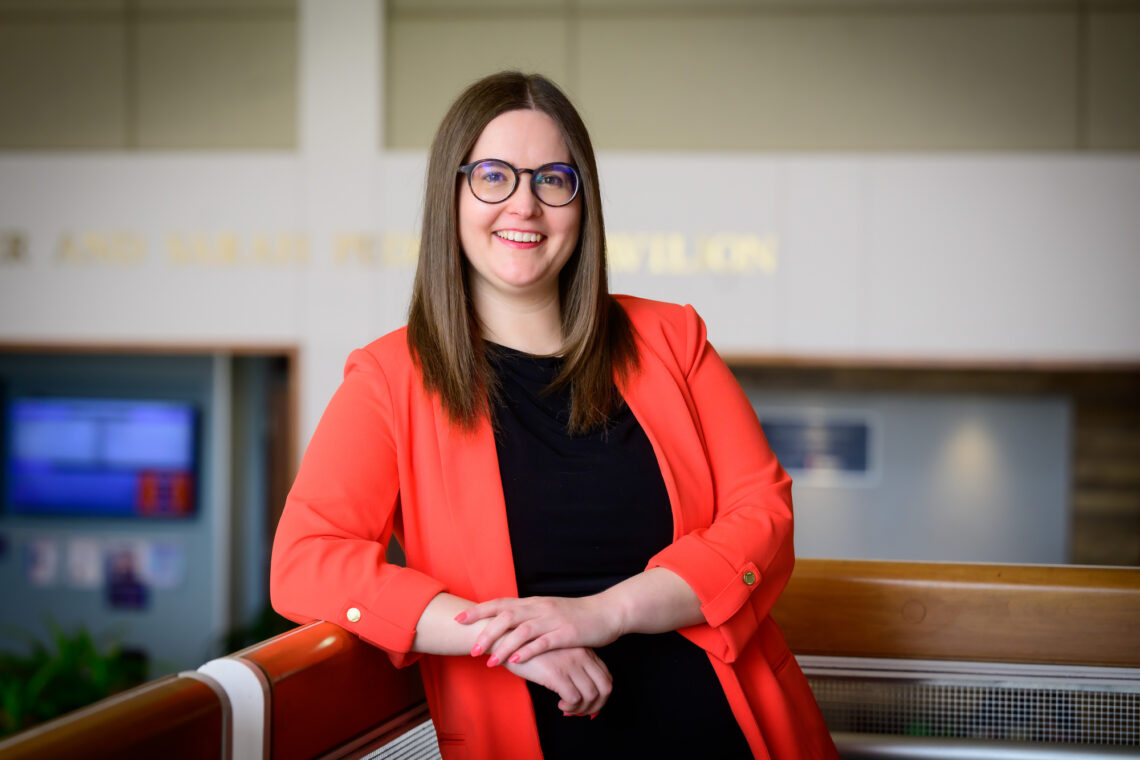
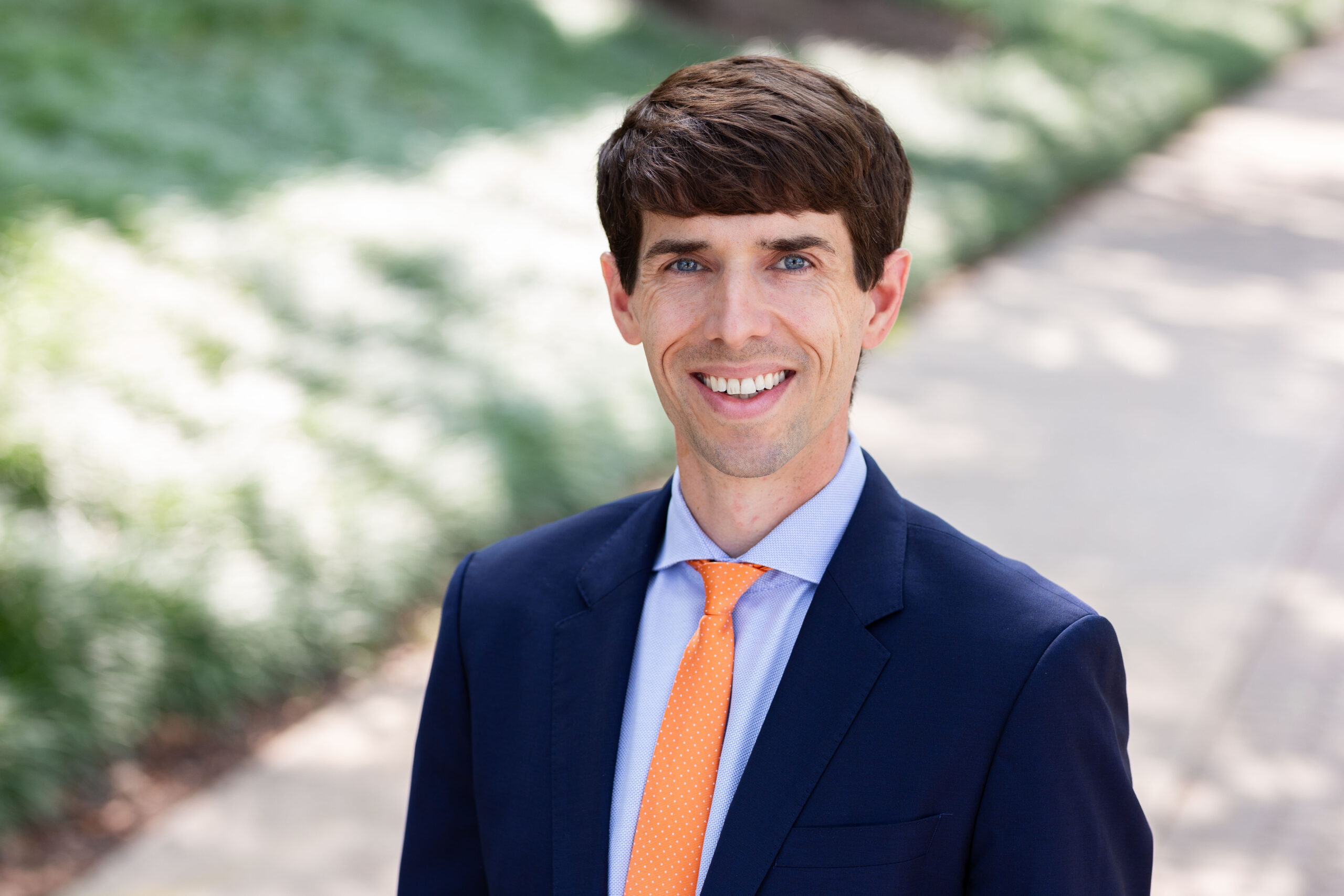
Dania Duncan Moreno, LLM ’07

Dania Duncan Moreno has joined Duane Morris LLP as a partner in the firm’s Real Estate Practice Group in its Dallas office. Before joining Duane Morris, Duncan Moreno was a partner at Bell Nunnally & Martin LLP. Duncan Moreno focuses her practice on both domestic and cross-border real estate and corporate transactions. Licensed in Texas and Mexico, she regularly handles hospitality, retail, industrial and residential projects throughout Mexico. In Texas, her practice emphasizes retail and industrial real estate matters.

Rowell files regulatory comment, prompting change in regulation of nuclear safety

Working with an interdisciplinary team of nuclear engineers, Professor Arden Rowell coauthored a public comment submitted to the Nuclear Regulatory Commission in response to its proposed “Sunset Rule.” The rule had proposed “sunsetting” ten regulatory rules addressing nuclear safety.

The comment addressed foundational administrative law issues, including statutory authority, the agency’s current mission, and the requirements of reasoned decision-making under the Administrative Procedure Act. Following the close of the public comment period, the NRC partially withdrew the proposed rule.

The episode highlights the importance of expert participation in the administrative process. It also reflects the College of Law’s strong engagement with national policy questions at the intersection of law, technology, and public governance.

Lauren Stewart ’19

Lauren Stewart (nee Mioduszewski) has joined Much Shelist, P.C., as a commercial real estate associate. Lauren previously practiced at Sheppard Mullin in Chicago.

College of Law
504 East Pennsylvania Avenue
Champaign, IL 61820
(217) 333-0931