Is Utah’s first-in-the-nation pilot program allowing AI to renew prescriptions legal and ethical?

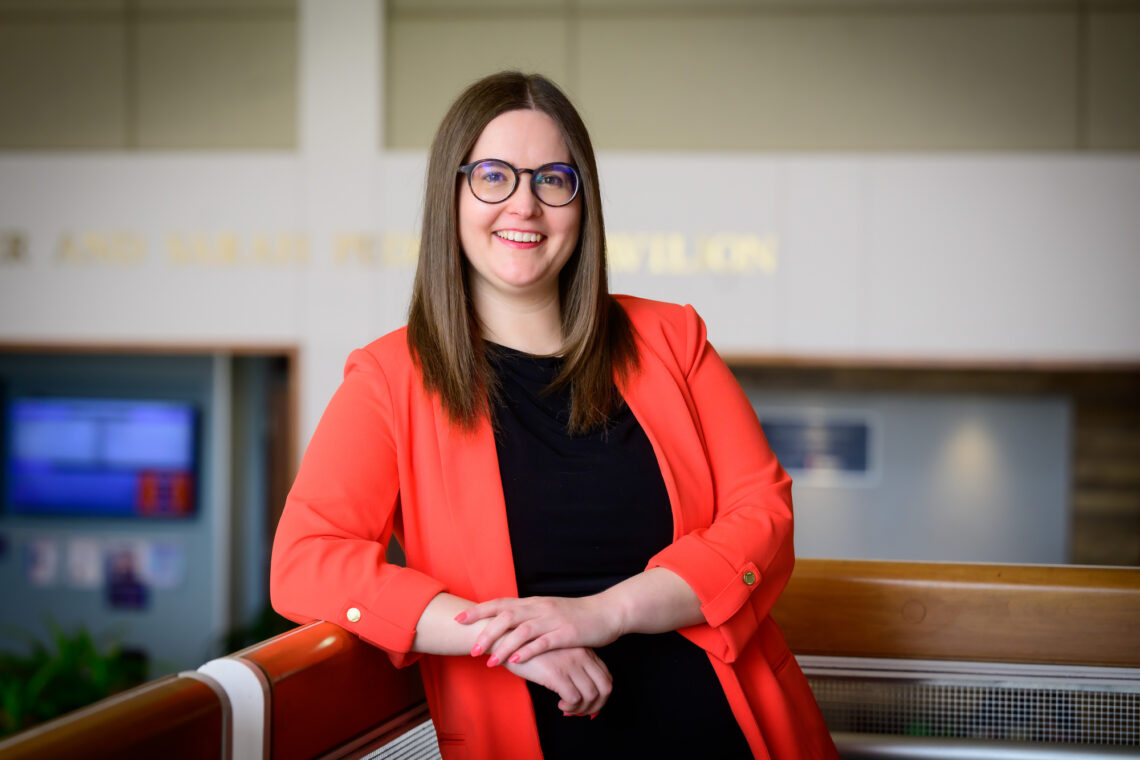
Utah has introduced a first-in-the-nation pilot program that allows AI to independently renew certain prescriptions for patients with chronic conditions. The 12-month initiative, which launched in January 2026, uses an AI system developed by the health tech company Doctronic, and operates under a special state “regulatory sandbox” designed to test emerging technologies. A New England Journal of Medicine (NEJM) article, authored by Sara Gerke, Ravi B. Parikh, and I. Glenn Cohen, raises serious questions about its efficacy and legality.

The program currently applies to nearly 200 commonly used medications, including treatments for conditions such as high blood pressure, diabetes, and depression. State officials say the goal is to improve medication adherence. After an initial review period of 250 cases by a physician, the AI system will begin making prescription renewal decisions without direct human oversight.

While the authors agree that “autonomous prescription renewal may offer benefits in narrowly defined clinical contexts,” they focus on several medical and legal issues raised by the program, including:

  • Risks when the system is used for medications requiring frequent dose adjustments or in patients whose clinical status could change rapidly.
  • Whether Doctronic problematically failed to seek FDA premarket authorization for the AI system as a medical device.
  • Whether AI-based prescribing is an instance of “misbranding” carrying potential civil or criminal penalties, because prescribing must be done by “a practitioner licensed by law to administer such drug.”

The article also discusses the complex relationship between state and federal law at play in such autonomous AI systems. “Such systems hold a lot of potential benefit for patients,” said I. Glenn Cohen, a Professor and Deputy Dean at Harvard Law School and one of the article’s authors, “but especially as the first-in-the-nation, it is important for patients that the developers consider all the legal and ethical issues raised.”

Sherkow authors amicus brief for SCOTUS

Professor Jacob Sherkow has extensive scholarship in the area of patents and has been cited as an expert many times on the issue of drug labels being used in patent cases. In the case of Hikma Pharmaceuticals USA Inc. v. Amarin Pharma Inc., currently before the United States Supreme Court, Sherkow has authored an amicus brief with Professor Paul R. Gugliuzza of the University of Texas at Austin School of Law. The brief is written in support of neither party, but urges the court to discontinue allowing this practice of “infringement by label.”

Bloomberg and STAT quote Sherkow on Moderna settlement

In a settlement deal over claims Moderna infringed upon patents owned by Roviant in its COVID-19 vaccine, Moderna has agreed to pay up to $2.25 billion. The settlement, however, has a unique structure in which Moderna will pay $950 million up front and then another $1.3 million if an appeal to have parts of its liability offloaded to the federal government fail. “This was a case that should have settled at the very beginning,” Sherkow told STAT. “There was never any real dispute that Moderna was infringing. It was just a matter of coming up with a number that was mutually acceptable.”

Read Bloomberg’s coverage and STAT’s coverage of the settlement.

Sherkow talks drug labels with Illinois News Bureau

In his latest paper, Professor Jacob Sherkow argues that recent court decisions that treat safety information on a drug’s package as key evidence in patent cases against generic-drug manufacturers have been incorrectly adjudicated and should be reversed by the Supreme Court. “Those lower court decisions, which embrace a legal theory we call ‘infringement by label,’ are incorrect. It’s a fictional turn in the law that we hope the Supreme Court shuts down,” he told the Illinois News Bureau.

Sherkow quoted in Bloomberg Law on various patent lawsuits

Professor Jake Sherkow spoke to Bloomberg Law on several occasions in February, regarding patent lawsuits that are making their way through the courts.

One of the lawsuits, filed by Novo Nordisk A/S against Hims & Hers Health Inc., takes aim at the practice of drug compounding and highlights the ambiguity between the FDA’s compounding framework and US patent law. Sherkow said that the lawsuit demonstrates that compounding pharmacies and direct-to-consumer telehealth platforms have grown from “minuscule operations” into “real players” that brand-name drugmakers now view as worth targeting in patent litigation. Read more from Sherkow on this case at bloomberglaw.com.

Another lawsuit, filed by BioNTech SE against Moderna Inc., claims patent infringement involving mRNA vaccine technology.

“This is typical of cutting-edge technology as it matures,” Sherkow said. “The original patents—and patent disputes—are often about using the technology more broadly, with one or few early entrants suing manufacturers. As the technology develops—and that first generation of patents gets older—we see more, albeit narrower, patenting focusing on specific products, and a great number of patent holders suing (and cross-suing) other manufacturers.” Read more from Sherkow on this case at bloomberglaw.com.

Sherkow publishes perspective in NEJM

Drug labels required by the U.S. Food and Drug Administration are meant to help ensure safe and effective use of prescription drugs; however, recent court decisions have problematically treated those labels as key evidence in patent infringement cases, with drug companies engaging in what Professor Jacob Sherkow calls “patent gamesmanship” that could potentially limit access to affordable generic drugs. In his latest scholarship, published in The New England Journal of Medicine, Sherkow and his co-authors urge the Supreme Court to address this trend.

Sherkow presents work on patent infringement at Stanford and Ohio State Moritz College of Law

Professor Jacob Sherkow recently presented his work on patent infringement at three separate events. He presented a paper, “Compounding Patent Infringement” at the Stanford Patent Scholars Roundtable in January, and in February he presented “Infringement by Drug Label” at the Health Law Colloquium at the Ohio State University Moritz College of Law as well as at the Center for Law and the Biosciences at Stanford Law School.

Gerke and co-authors urge caution as FDA plans to phase out animal testing in drug development

Replacing animal testing for drug trials is promising, but Professor Sara Gerke and her co-authors on a new paper on the subject believe caution is warranted before adopting change. Gerke recently spoke to the Illinois News Bureau about the paper.

“The primary goal of the FDA is to make animal testing the exception in 3-5 years, and a secondary goal is to get drugs to the market faster by reducing research and development costs,” she said. “Those are all worthy and ambitious goals, but it’s hard not to worry about the attendant risks in doing so. We really need to start thinking about how we ought to validate these new approach methodologies so that they’re at least as effective as animal testing.”

Gerke publishes article in AMA Journal of Ethics

As artificial intelligence technology becomes more commonplace, questions about its ethical use are of more salience. In the AMA Journal of Ethics, Professor Sara Gerke examines one area of interest in this field: how ambient listening and transcription technology influences medical doctors’ documentation practices and clinical encounters. In her article, Gerke and her co-author seek to answer questions and provide best-practice recommendations for informed consent processes and patient-clinician relationships.

College of Law
504 East Pennsylvania Avenue
Champaign, IL 61820
(217) 333-0931